
NYC Runner’s Guide to Healing: Concierge Physical Therapy
We treat overuse injuries like runner’s knee and Achilles tendinitis with high-IQ strategy, not high-tech gadgets. Recover in your home or office.
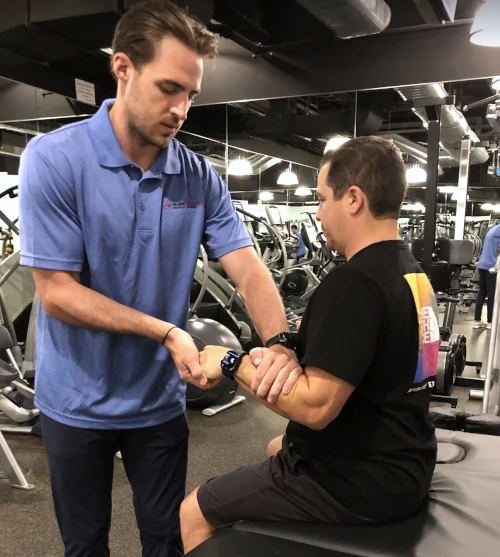
Healing NYC Runners with a Concierge Physical Therapy “High-IQ” Approach
Efficiency is the Ultimate Luxury In New York City, your schedule is as tight as your hamstrings. You balance a spectrum of demanding roles—in your personal and professional life—but the one that challenges your physical resilience is your identity as a runner. You don’t have time to commute to a clinic, wait in a lobby, and then be passed off to an aide who hooks you up to a machine. At Palmer Concierge PT, we believe the current trend of “tech-heavy” rehab—relying on anti-gravity treadmills and cryotherapy labs—creates a dangerous dependency. If your recovery relies on a $100,000 machine, your recovery stops the moment you board a plane for business or work late at the office.
While many Sports Physical Therapists in Manhattan aim to strap you into 3D motion capture systems or instrumented treadmills for AI analysis, we achieve the same diagnostic outcome through Mastery—the clinical expertise to correlate your history, symptoms, and movement patterns into an accurate diagnosis without relying on generic algorithms. We position concierge physical therapy not as “low-tech,” but as “high-IQ.” Our philosophy is simple: the solution to your injury isn’t in a lab; it is in your biomechanics, specifically addressing the root causes—such as muscular imbalances or gait inefficiencies—that machines often overlook. By treating you in your own environment—your home, your office, or your gym—we don’t just rehab an injury; we teach you to integrate healing into your chaotic life. This ensures that whether you are in Manhattan, Long Island, or traveling, you possess the tools and body mechanics mastery to remain pain-free.
New York City Is Your Running Clinic: Mastery of the NYC Terrain
New York City Is Your Running Clinic: Mastery of the NYC Terrain
We don’t just treat you in the comfort of your living room or between meetings in your corner office—though we do that, too, maximizing your time and privacy. We take your rehab to the pavement, meeting you at NYC’s premier running locations to apply treatment exactly where you need to perform.
By moving therapy out of a sterile box and into your “comfort zone,” we accelerate healing through real-world application. We utilize the specific topology of the city to stage your recovery:
- The Return-to-Run (Flat Loading): When you are cleared for your first miles, we meet you on the West Side Highway (Hudson River Greenway). Its flat, paved continuity allows us to analyze your gait and manage volume without the variable stress of traffic lights or erratic inclines.
- The Strength Phase (Incline Mechanics): When it is time to test that Achilles or build a glute drive, we head to the Williamsburg Bridge or the loop at Prospect Park. We utilize the steady inclines for functional strengthening and form drills that static gym exercises cannot replicate.
- Impact Reduction (Soft Surfaces): For runners recovering from stress fractures or shin splints who need to get off the concrete, we take you to Van Cortlandt Park in the Bronx. The dirt trails and “The Flats” offer the perfect soft-surface environment to reintroduce impact safely.
Whether it is pre-run glute activation at the base of the bridge or post-run manual therapy on a park bench, we ensure you possess the tools and body mechanics mastery to remain pain-free, anywhere in the world.
The 4 Stages of a NYC Runner’s Rehab
The 4 Stages of a NYC Runner’s Rehab
To the Type-A NYC runner—who balances a high-pressure career with regular running and views pain as a negotiation rather than a stop sign—an injury feels like a failure of discipline. It isn’t. It is usually a failure of mechanics or programming, typically stemming from ‘training errors’ like increasing mileage too abruptly or ignoring the cumulative stress on your body. We don’t just ‘fix’ you; we build a strategy that turns recovery into resilience, ensuring you remain a high-performing runner for the long haul.
1. Diagnosis: Identifying the Pathology
You identify the localized symptom; we identify the biomechanical root cause that triggered it. Most runners self-diagnose based on location, but pain is often a referred symptom, not the root cause. For example, knee pain is frequently the result of a ‘lazy’ glute or poor foot control. You can often detect a ‘lazy’ glute (weak hip abductor) visually: it manifests as your knee drifting or collapsing inward (internal rotation) every time your foot lands, because the hip muscle fails to keep the leg aligned. Poor foot control is often audible; if you hear a heavy, slapping sound or feel a hard heel strike on the pavement, you are likely overstriding, which sends excessive shockwaves up the shin rather than using your muscles to absorb the load. Thus in treating NYC runners we move beyond the symptom to identify the specific pathology—the structural or mechanical failure causing the load to accumulate in the wrong tissue.
2. The Treatment Plan: The Executive Strategy
We design a plan that fits your reality. As a mobile concierge practice, we offer the ultimate flexibility to treat you where and when it fits your workflow: a pre-market session in your office before the day begins, a focused treatment during your lunch hour, or a recovery session at your home before you unwind for the night. You skip the commute and the waiting room entirely. If you can’t commit to 60 minutes of exercises a day, we won’t prescribe them. Instead, we build a specialized care plan tailored to your specific needs. Because we aren’t limited by insurance caps or generic protocols, we dictate the strategy based entirely on your physiology and your calendar.
3. Treatment & Rehab: Functional Mastery
This is where “High-IQ” beats “High-Tech.” We don’t need heavy machinery to fix a runner; we need gravity, your body weight, and a strategy. By utilizing the environment around you, we eliminate the barrier of “getting to the gym,” ensuring your rehab happens consistently.
- Manual Therapy: We provide hands-on mobilization to restore tissue quality and range of motion, preparing the body to load effectively.
- Environment-Based Rehab: We teach you to master your own environment, turning your apartment or office into a functional biomechanics lab. We innovate using basic household items to replicate expensive clinical tools:
- Strength & Load: We replace kettlebells with laundry detergent jugs or milk gallons (approx. 8.5 lbs) to add load to your squats and lunges. We use backpacks filled with books to increase resistance for lower-body conditioning.
- Stability & Balance: We replace foam balance pads with couch cushions or pillows. Performing single-leg holds on these unstable surfaces forces your stabilizers to engage, mimicking the uneven terrain of NYC streets.
- Mobility & Gliding: We replace plastic slider discs with paper plates or small towels on hardwood floors. These allow for low-impact lunges and hamstring eccentric curls that build control without joint stress.
- Power & Capacity: We utilize stairs for calf raises, step-ups, and power drills to build the specific lower-limb tolerance required for running.
This functional approach ensures your body learns to handle load in the real world, not just in a vacuum.
4. Returning to Running Safely: Escaping the “Boom and Bust” Cycle
The most dangerous moment for a runner is the first run back. To the high-performing New Yorker, rest feels like rust. The moment pain subsides, the impulse is to jump back into your standard pace and mileage. This baits you into a biological trap: you mistake metabolic fitness for tissue tolerance, resulting in a cycle of immediate overload and subsequent breakdown (the “Boom and Bust Cycle”).
The Cycle Defined: The “Boom” happens because your cardiovascular fitness (your engine) recovers faster than your tissue tolerance (your chassis). After two weeks of rest, your lungs feel ready for a 5-mile run, but your tendons and bones have deconditioned. You go out for that run, feel great during the “Boom,” but wake up the next morning with inflammation that sets you back three weeks (the “Bust”). This cycle often turns a 4-week recovery into a 6-month chronic issue.
How We Avoid It (The Strategy): We break this cycle through precision load management. We monitor your return-to-run program remotely, adjusting volume and intensity to prevent the “training errors” that account for over 60% of running injuries. We adhere strictly to the 10% rule—never increasing load by more than 10% week-over-week—to ensure your structural system adapts before it fails.
Real-World Application in NYC: We don’t just send you a spreadsheet; we validate your mechanics where you actually run.
- The Hill Test: Once you are ready for load, we utilize the inclines of the Williamsburg Bridge to test tendon capacity under our supervision, ensuring you aren’t running with the same mechanics that got you injured in the first place.
- The Flat Check: We may schedule your first low-impact return run on the West Side Highway, utilizing the flat, predictable surface to analyze your gait without the variable stress of hills.
- The Soft Landing: For those recovering from impact injuries like stress fractures, we may meet you at Van Cortlandt Park to reintroduce mileage on soft trails rather than unforgiving concrete.
Returning to Running Safely: Escaping the “Boom and Bust” Cycle
Returning to Running Safely: Escaping the “Boom and Bust” Cycle
The most dangerous moment for a runner is the first run back. To the high-performing New Yorker, rest feels like rust. The moment pain subsides, the impulse is to jump back into your standard pace and mileage. This baits you into a biological trap: you mistake metabolic fitness for tissue tolerance, resulting in a cycle of immediate overload and subsequent breakdown (the “Boom and Bust Cycle”).
The Cycle Defined: The “Boom” happens because your cardiovascular fitness (your engine) recovers faster than your tissue tolerance (your chassis). After two weeks of rest, your lungs feel ready for a 5-mile run, but your tendons and bones have deconditioned. You go out for that run, feel great during the “Boom,” but wake up the next morning with inflammation that sets you back three weeks (the “Bust”). This cycle often turns a 4-week recovery into a 6-month chronic issue.
How We Avoid It (The Strategy): We break this cycle through precision load management. We monitor your return-to-run program remotely, adjusting volume and intensity to prevent the “training errors” that account for over 60% of running injuries. We adhere strictly to the 10% rule—never increasing load by more than 10% week-over-week—to ensure your structural system adapts before it fails.
Real-World Application in NYC: We don’t just send you a spreadsheet; we validate your mechanics where you actually run.
- The Hill Test: Once you are ready for load, we utilize the inclines of the Williamsburg Bridge to test tendon capacity under our supervision, ensuring you aren’t running with the same mechanics that got you injured in the first place.
- The Flat Check: We may schedule your first low-impact return run on the West Side Highway, utilizing the flat, predictable surface to analyze your gait without the variable stress of hills.
- The Soft Landing: For those recovering from impact injuries like stress fractures, we may meet you at Van Cortlandt Park to reintroduce mileage on soft trails rather than unforgiving concrete.
The Top 5 “Below the Knee” Injuries of New York City Runners
The Top 5 “Below the Knee” Injuries of New York City Runners
It’s not uncommon for runners to initially ignore or minimize the pain until it affects your walking or sleep and here is a breakdown of the 5 most common injuries we treat in NYC runners.
1. Runner’s Knee (Patellofemoral Pain Syndrome)
- The What: The kneecap (patella) is not tracking properly in its groove, grinding against the thigh bone due to muscle imbalances.
- The Distinction: You feel a dull ache behind or around the kneecap. The “tell” is the “Movie-Goer’s Sign”—stiffness or pain after sitting for an extended period of time with knees bent – such as after you’ve sat in a theater watching a movie.
- The Strategy: We don’t just ice the knee. We strengthen the outer hips (glutes) and release the outer thigh muscles to stop them from pulling the kneecap off-track.
The Recovery Timeline: The Biological Reality
To the NYC executive runner, time off feels like a penalty. However, your knee does not negotiate with your calendar; it negotiates with physics. While every runner’s pathology is unique, the clinical standard for recovering from Runner’s Knee is typically 4 to 6 weeks. However, this timeline is not a sentence to sit on the couch. It is a period of active re-engineering. The 4-6 week window is a baseline. Your actual return-to-run date depends entirely on three variables:
- The “Ignore” Factor: Did you stop at the first sign of the “Movie-Goer’s Sign” (stiffness after sitting), or did you run through the pain for three weeks? If you ignored the warning signs, severe cases can take months to resolve.
- The Pain Rule: The biological rule is non-negotiable: you must stop running until you can run without pain. Continuing to run on an inflamed patella extends the recovery timeline indefinitely.
- Mechanical Correction: Recovery is not just about waiting for inflammation to subside; it is about fixing the root cause. If you do not correct the “lazy glute” or the internal rotation of the femur, the pain will return the moment you ramp up mileage.
We don’t believe in passive rest. We use the recovery window to build a bulletproof chassis.
- Phase 1: The Reset (Weeks 1–2): The goal is to eliminate acute inflammation. We utilize RICE (Rest, Ice, Compression, Elevation) and manual therapy to release the outer thigh muscles that pull the kneecap off-track,.
- Phase 2: The Rebuild (Weeks 2–4): We introduce “Mastery” exercises. We target the hip abductors and glutes. Research shows that runners who can hold a single-leg glute bridge for 30 seconds or more have a significantly lower risk of overuse injury. We use this time to ensure you can pass this test before you hit the pavement.
- Phase 3: The Ramp-Up (Weeks 4–6): Once you are pain-free during daily activities (like descending stairs), we initiate a gradual return-to-run program. We monitor for the “boom and bust” cycle, ensuring volume increases by no more than 10% per week.
The Bottom Line: You can treat this as 6 weeks of “downtime,” or 6 weeks of mechanical optimization. The choice dictates whether you return as a fragile runner or a resilient athlete.
2. Shin Splints (Medial Tibial Stress Syndrome)
- The What: a traction injury where the connective tissues attaching your lower leg muscles to the tibia (shine bone) are physically pulling away from the bone due to cumulative repetitive stress.
- The Distinction: The pain is diffuse—you can feel it over a stretch of 2-3 inches along the inner shin. It usually hurts at the start of a run, warms up (fades), and returns after you stop.
- The Strategy: We analyze your cadence. Often, increasing step rate reduces the impact force on the shins. We treat the tight calves pulling on the bone.
The Recovery Timeline: Respecting the Tissue
For the NYC runner, shin splints are deceptively dangerous because they often “warm up” and stop hurting during the run, only to throb afterwards. Because you can run through them, many high-performers do—until they can’t. If caught early and managed correctly, the typical recovery timeline involves a break from running for “a few weeks” (typically 2–4 weeks) to allow the inflammation to subside.
However, this timeline is fluid. It depends entirely on whether you are dealing with soft tissue inflammation or a bone that is on the brink of failure. Recovery is not a straight line; it is a calculation based on your tissue health and compliance.
The “Traffic Light” Caveat (Severity)
- Green/Yellow (Early Stage): You feel a dull ache that fades during the run. If you catch it here and off-load immediately, you are looking at the shorter end of the timeline (2–3 weeks).
- Red (Late Stage): You feel sharp pain that does not go away, or pain even when walking or resting. This indicates you have pushed the bone to its limit. If this has progressed to a stress fracture, your timeline jumps from weeks to months.
If you rest for 3 weeks but do not fix the mechanics that caused the stress—such as overstriding or poor calf strength—the pain will return the moment you resume your previous mileage. True recovery requires re-engineering your gait. What usually works is applying the “Active Rest” Rule where you will not be running, but you will not be idle.
- Off-Loading: You must stop the high-impact loading that caused the injury.
- Ice & Management: We utilize ice (wrapped, never direct on skin) to manage acute inflammation during the first few days.
- Cross-Training: To maintain cardiovascular fitness without the impact, we shift you to low-load activities like swimming or cycling.
We don’t guess when you are ready; we test.
- Phase 1: The Off-Load (Weeks 1–3): We remove running impacts to let the periosteum (the tissue covering the bone) heal. We may introduce night splints or manual therapy to address tight calves that are pulling on the shin bone.
- Phase 2: The Mechanical Audit: We analyze your gait. Shin splints are often caused by overstriding (landing with the foot too far in front of the knee). We may increase your cadence (steps per minute) to reduce the load on the tibia.
- Phase 3: The Soft Return: When you are pain-free while walking and hopping, we reintroduce running on soft surfaces. As mentioned in our location strategy, we head to the dirt trails of Van Cortlandt Park to minimize impact forces before attempting the concrete of Central Park.
The Bottom Line: Shin splints are a warning shot. If you heed it, you would lose a few weeks. If you ignore it, you risk a stress fracture and lose a season of running.
3. Achilles Tendinitis
- The What: Inflammation or degeneration of the large tendon connecting your calf to your heel.
- The Distinction: Stiffness in the morning is the hallmark. The tendon feels thick or tender to the pinch. Pain is often felt during the “push-off” phase of running.
- The Strategy: Eccentric loading. We teach you specific heel-drop protocols on a stair or step to realign collagen fibers without needing a gym.
The Recovery Timeline: The Stiffness Spectrum
For the Type-A runner, the Achilles tendon is the ultimate test of patience. Unlike a muscle strain which has a rich blood supply, tendons are avascular and stubborn. The recovery timeline varies wildly based on when you stop ignoring it. If you address the issue at the first sign of morning stiffness, recovery can occur in 2 to 4 weeks. However, if you push through the pain until it becomes chronic (tendinosis), the timeline for remodeling that tissue expands to 12 weeks or more. Your return to the pavement is dictated by the severity of the damage to the collagen fibers. We can gauge that with what is referred to as the “Morning Hobble” Test (Severity Indicator).
Grade 1 (The Warning): You feel stiff for the first 5 minutes of your morning walk or the first mile of a run, but it “warms up” and goes away. *Timeline: 2–3 weeks of modified loading.*
Grade 2 (The Red Flag): The pain is present during the run and lingers afterward. You may feel a “creaking” sensation in the tendon. *Timeline: 6–8 weeks.*
Grade 3 (The Failure): Sharp, sudden pain that feels like a kick to the back of the ankle. This may indicate a partial tear. *Timeline: Months, possibly requiring immediate medical intervention*.
Be mindful, total rest is often the wrong strategy for tendons. Tendons require load to align collagen fibers correctly. If you simply rest for a month, the pain may subside, but the tendon remains weak and disorganized, leading to immediate reinjury upon return. We use active recovery to stimulate healing without overloading the tissue, a kind of “load and adapt” strategy in the initial weeks, to stop the “eccentric overload” that causes the injury—usually hill running or speed work. We may introduce heel lifts or wedges in your daily shoes to shorten the tendon and relieve tension while walking.
The Achilles tendon acts as a strict accountant; it keeps a precise score of every mile you fake your way through. Attempting to run through ‘warm-up’ pain or ignoring morning stiffness isn’t discipline—it is a gamble that leads to repetitive eccentric overload. If you heed these early warning signs, we can help you heal in weeks. If you try to push through the stiffness, the tendon will likely force a season-ending shutdown and long term path to recovery.
4. Plantar Fasciitis
- The What: The natural shock absorber built into the sole of your foot has become frayed and irritated because the pounding of the pavement exceeded what the tissue could handle.
- The Distinction: The “First Step” pain. Sharp, stabbing pain in the heel the moment you get out of bed, which eases after walking around.
- The Strategy: We look up the chain. Tight calves often limit ankle motion, forcing the foot arch to collapse and strain. We treat the calf and foot mechanics simultaneously.
The Recovery Timeline: The “First Step” Negotiation
For the NYC runner, Plantar Fasciitis is often the most frustrating injury because it strikes the moment you wake up. It feels like walking on sharp stones or glass. Because the plantar fascia—the thick band connecting your heel to your toes—acts as your body’s primary shock absorber, you cannot simply “push through” this injury. If you address the pain immediately—specifically that sharp stabbing sensation in the heel—recovery typically takes a few weeks. However, if you ignore the early warning signs and the condition progresses from acute inflammation to degeneration (tearing of the fascia), the timeline expands significantly. Be aware that Plantar Fasciitis can linger due to blood flow and mechanics. You cannot force it to heal faster than its physiology allows, but you can create the optimal environment for it. Plantar Fasciitis is a stubborn injury because you walk on it all day. If you catch it during the “dull ache” phase, we can resolve it in weeks. If you wait until you are limping out of bed, you are looking at a much longer road to recovery.
5. IT Band Syndrome
- The What: Friction and inflammation where the Iliotibial band crosses the outside of the knee.
- The Distinction: Sharp, stinging pain on the outside of the knee. It typically flares up at a specific mileage (e.g., always at mile 3) or when running downhill.
- The Strategy: You cannot “stretch” the IT band; it is too tough. We strengthen the hip stabilizers (glute medius) to prevent the knee from caving inward, which causes the friction.
The Recovery Timeline: The Friction Equation
To the NYC runner, IT Band Syndrome is often the most deceptive injury. It feels like a mechanical locking or sharp stabbing on the outside of the knee that appears out of nowhere—usually at the exact same mileage marker on every run. Because it is a friction injury, you cannot “tough it out.” If you intervene at the first sign of lateral knee pain, conservative treatment is highly effective, with 90% of runners recovering within weeks. A typical timeline for a full return to pain-free volume is 4 to 8 weeks. However, this timeline is dictated by how long you tried to run through the pain before calling us.
The clock on your recovery depends on the “Mileage Threshold” and your biomechanical compliance.
1. The “Mileage Threshold” (Severity Indicator) ITBS is unique because it is predictable.
- The Early Stage (Mile 6+): If the pain only arrives deep into a long run (e.g., mile 6 or 7) and fades quickly after stopping, you are in the “inflammatory” phase. We can likely resolve this in 2–4 weeks by modifying volume and correcting hip mechanics.
- The Late Stage (Mile 2): If the pain strikes early (mile 2) or is present while walking or sitting with the knee bent, you have significant tissue irritation. This indicates the bursa underneath the band is inflamed. Recovery here extends to 6 weeks or more because we must fully offload the tissue before rebuilding.
The fix is treating the Tensor Fasciae Latae (TFL) muscle (known as the The Hip Pocket Muscle because of its location at the hip) and strengthening the glutes. The pain is at the knee, but the problem is almost always at the hip. ITBS is caused by the knee diving inward due to a weak or tired Glute Medius. If we do not strengthen the outer hip to control the femur, the friction—and the pain—will return immediately upon resuming your normal mileage.
In a way, IT Band Syndrome is a “check engine light” for your hip stability. If you respect the friction limits and strengthen the glutes, this is a 4-week detour. If you ignore it, the friction will eventually make it impossible to run even a single mile.
How can I tell the difference between shin splints and a stress fracture?
How can I tell the difference between shin splints and a stress fracture?
The Distinction: Shin Splints vs. Tibial Stress Fracture. To the busy NYC runner, these injuries may feel identical in the early stages, but distinguishing them is critical. Mistaking a stress fracture for shin splints and continuing to run can lead to a catastrophic bone failure that benches you for months.
1. The Pathology (The “What”)
- Shin Splints (Medial Tibial Stress Syndrome): This is a traction injury where the lower leg muscles—specifically those navigating the swing phase of your gait—are fatigued and physically pulling away from their attachment points on the tibia (shin bone), irritating the bone’s protective sheath
- Tibial Stress Fracture: This is a structural failure. It consists of tiny hairline cracks in the bone itself. It is often the result of ignoring shin splints; if the constant stress on the shinbone is not managed, it can progress into a fracture.
2. The Pain Profile (How to Tell)
- Shin Splints: The pain is often associated with movement of the ankle during the swing phase of your gait. While it can be stabbing in nature, the pain typically stops when exercise ends.
- Stress Fracture: The pain is more severe and persistent. A stress fracture results in “extreme pain” when bearing weight. Unlike shin splints, which may fade after a run, stress fracture pain often remains present even when you are not running, and swelling is frequently present.
If you suspect shin splints, we don’t just look at your shins; we audit your mechanics. We look for ‘overpronation’—where your foot rolls inward excessively—or ‘lazy’ foot control, where fatigue causes your arch to collapse. Both errors force your shin bone to twist under pressure.
If the pain is severe when you stand or hop, we move immediately to ‘off-loading.’ In plain English, this means we stop the pounding so the bone can breathe. But this doesn’t mean you sit on the couch; it means we change your environment.
- What ‘Off-Loading’ Actually Looks Like: We swap the impact of concrete for non-weight-bearing cardio. You maintain your fitness engine by swimming or using a stationary bike, which builds leg strength without the concussive force that hurts the bone,. We may also use taping or orthotics temporarily to lift the arch and take the tension off the tibia,.
- What ‘Load Management’ Actually Means: Once you are pain-free while walking, we don’t just send you back to your old mileage. We engineer a gradual return. We strictly enforce the 10% Rule, ensuring you never increase your weekly mileage by more than 10%,. We may move you to softer surfaces, like the dirt trails at Van Cortlandt Park, to cushion the blow as your bones reharden. We rebuild your tolerance strategically, ensuring your structure can handle the stress before we add the speed.”
What are the benefits for a NYC Runner of choosing concierge PT over a traditional clinic?
What are the benefits for a NYC Runner of choosing concierge PT over a traditional clinic?
The choice between concierge physical therapy and a traditional clinic is a choice between Mastery and Volume. For the busy NYC runner, time is your most non-renewable resource. Traditional clinics operate on a volume-based model necessitated by insurance reimbursement rates, often resulting in assembly-line care. Concierge PT flips this model, offering a “High-IQ” strategy that prioritizes efficiency, personalized attention, and long-term resilience.
Here are the distinct benefits of choosing concierge PT:
1. Uncompromising Efficiency (The Executive Priority)
In a traditional setting, you lose hours to commuting, sitting in a waiting room, and dealing with administrative bureaucracy.
- We Come to You: Whether you are at home, in your office, or at a hotel, we eliminate the commute. This integrates recovery seamlessly into your chaotic schedule rather than disrupting it,.
- Zero “Dead Time”: There is no twiddling your thumbs in a waiting room. Your session begins exactly when scheduled.
- Rapid Access: You can often schedule appointments quickly, sometimes within 48 hours, bypassing the typical wait times associated with large hospital systems or busy clinics,.
2. The 1-on-1 “High-IQ” Standard
The traditional insurance model forces therapists to see 12–25 patients a day, often juggling 2 to 4 patients per hour.
- No Hand-Offs: In traditional clinics, you are often evaluated by a physical therapist and then passed off to an unlicensed “tech” or aide to count your reps. With concierge PT, you work 1-on-1 with a Doctor of Physical Therapy (DPT) for the entire session.
- Continuity of Care: You see the same specialist every time, not whoever happens to be on shift. This allows us to track subtle changes in your biomechanics and progress faster.
- Undivided Attention: You get 100% of the therapist’s focus, ensuring proper form and immediate feedback, rather than receiving 25% of their attention while they manage other patients.
3. Strategy Over Protocol
Insurance-based clinics often rely on standardized, “cookie-cutter” protocols to maximize reimbursement.
- Root Cause Resolution: Because we are not restricted by insurance caps, we don’t just treat the symptom (e.g., knee pain); we analyze the entire kinetic chain to identify the root cause, such as hip weakness or foot mechanics.
- Real-World Application: Instead of using generic gym equipment, we teach you to rehab using your own environment—your office chair, your stairs, or gravity—mastering body mechanics that apply to your actual daily life.
- Prevention Focus: We move beyond “fixing what’s broken” to preventative medicine. We identify risk factors before they become injuries, effectively “proofing” your body for future marathon training.
4. Freedom from Bureaucracy
- Direct Access: You do not need a physician’s referral or prescription to begin treatment. This removes a significant barrier to entry and allows you to address pain immediately before it becomes a chronic pathology.
- Insurance Independence: By not relying on insurance approvals, we dictate the plan of care based on your physiology and goals, not on what an insurance adjuster deems “medically necessary”.
- Cost-Effectiveness: While the upfront cost per session may appear higher, the superior quality of care often means you need fewer visits to achieve full recovery compared to the 3-visits-per-week grind of traditional clinics.
The Bottom Line: You don’t need a facility filled with machines; you need a strategy tailored to your physiology. Concierge PT offers the luxury of time, the security of expertise, and the efficiency required by the high-performing runner.
What is the 10% rule for increasing weekly running mileage?
What is the 10% rule for increasing weekly running mileage?
The 10% Rule: The Mathematical Limit of Your Physiology. To the Type-A runner, progress often looks like pushing harder every single week. However, from a biomechanical perspective, your cardiovascular system adapts faster than your skeletal structure. The 10% Rule is your risk management strategy to prevent structural failure.
1. The Protocol The rule is simple but non-negotiable for injury prevention: Do not increase your weekly running mileage by more than 10% week-over-week.
- The Application: If you run 20 miles this week, next week’s cap is 22 miles.
- The Goal: This calculated progression allows your tendons, bones, and ligaments to adapt to the increased load without crossing the threshold into overuse trauma.
2. Why It Matters (The Pathology of “Too Much, Too Soon”) Most running injuries are not caused by a single traumatic event but by training errors—specifically, increasing volume or intensity too quickly.
- Achilles Tendinopathy: This condition is frequently triggered by abrupt mileage increases or sudden introduction of hill running, which causes repetitive eccentric overload on the tendon.
- Runner’s Knee (PFPS): Overuse from rapid mileage spikes is a primary driver of patellofemoral pain, as the supporting musculature fatigues and fails to track the kneecap properly.
3. The “High-IQ” Nuance: Single-Variable Progression While the 10% rule manages volume, true mastery requires managing all variables. You should never increase distance and intensity simultaneously.
The Adaptation Phase: Building tissue tolerance takes time. Following a similar run 3 or 4 times before increasing pace or distance allows the body to “proof” itself against the new load.
Isolate the Variable: If you are increasing your mileage by 10%, keep your pace steady. If you are introducing speed work or hills, keep your mileage flat. Changing multiple variables at once dramatically increases the risk of injury.
Runner’s Win When They Stop Guessing and Start Strategizing!
Your recovery shouldn’t be a gamble. Whether you are navigating the “Boom and Bust” cycle, questioning a lingering stiffness in your Achilles, or simply want to optimize your biomechanics for the NYC streets, we are here to provide clarity. Do not wait for a minor “niggle” to become a season-ending injury. Call or email us directly with your specific questions regarding running pain, injury management, or performance strategy. Let’s engineer a plan that fits your life and keeps you on the pavement.
Patients often have to wait weeks or months to gain access to providers—long enough for conditions to move from acute to chronic. The Palmer Concierge PT Team brings physical therapy to you, to meet your wellness goals with the convenience of a mobile service that comes to your home, office or hotel. Our goal in providing personalized one-on-one care is to help you achieve a pain-free and healthy lifestyle. We offer a mobile physical therapy experience in New York City, Brooklyn and the Hamptons that empowers, educates, and restores balanced healthy movement without the drive to appointments, having to re-schedule your day, or cope with crowds and traffic.
–The Palmer Concierge PT Team