
Concierge Pelvic Floor Physical Therapy for Men in New York City
In navigating New York City’s high-stress landscape, the physical toll of the daily grind often surfaces in unexpected and uncomfortable ways. Spending long hours compressed in an office chair or standing through presentations places tremendous pressure on your body’s lumbopelvic region—the structural hub where your lower back, hips, and core connect. This mounting pressure decreases blood flow to the area and generally triggers pervasive muscle tension throughout your pelvis. When you combine this with the normal muscle bracing that happens during a high-stress workday, sitting or even standing all day can lead to what’s called ‘hypertonic pelvic floor musculature.’ This means your pelvic muscles become stuck in a tight, cramped position and literally forget how to relax—resulting in a chronic muscle spasm.
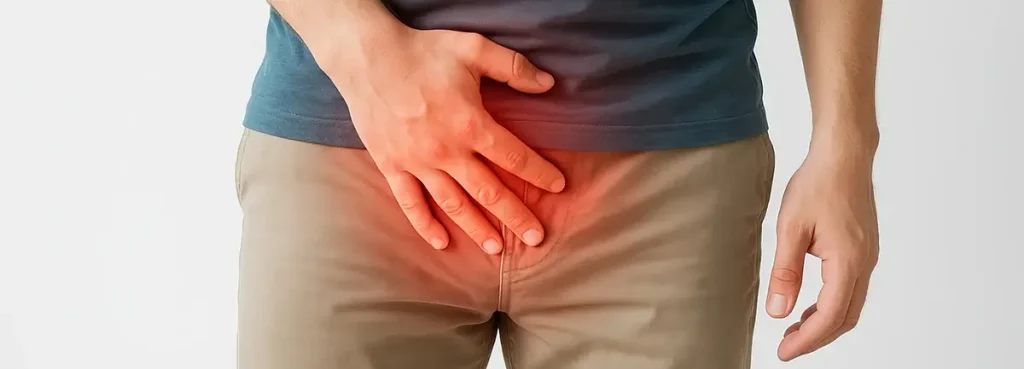
Persistent muscular spasming pulls on neighboring joints and tissues, and is experienced as lower back strain, hip pain, or prostate pain when the true culprit is actually a deep, mechanical weakening or imbalance within your pelvic muscles. Over time the stress and tension can cascade into a frustrating array of pelvic issues. These include urinary urgency (the sudden, uncontrollable panic that you need to find a restroom immediately), painful bowel movements, chronic perineal aching (a constant, heavy pain in the area between your scrotum and rectum), and erectile dysfunction—the inability to achieve or maintain an erection because severely cramped pelvic muscles are choking off vital blood flow.
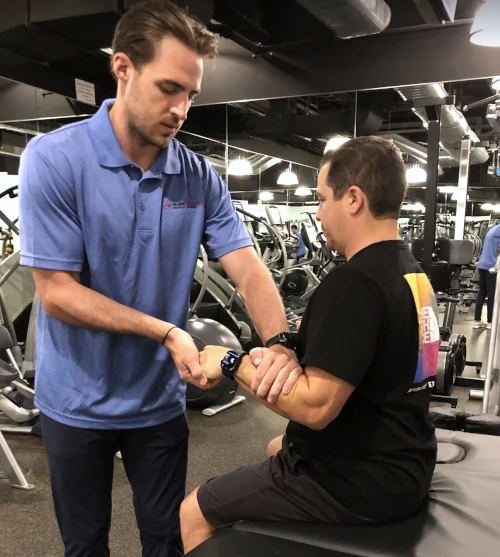
Treating these and other pelvic pains requires a clinical approach that’s both flexible, discrete, and can accommodate a New Yorker’s demanding schedule. That’s why Palmer Concierge Physical Therapy + Fitness delivers highly specialized, evidence-based Pelvic Floor Therapy directly to your NYC home, private office, or preferred gym. Our services bypass the traditional outpatient physical therapy clinic model, are tailor-made to revitalize your full health at minimal disruption to your lifestyle. We spare you the hassle of cross-town traffic, disrupted workdays, and crowded waiting rooms where your privacy is compromised. Operating in absolute confidentiality with dedicated, uninterrupted one-on-one sessions, we help you reclaim complete control of your body and perform at your peak without sacrificing a minute of your valuable time.
Take the first step toward lasting relief. Book a complimentary discovery call with Palmer Concierge PT +Fitness to learn how we can help you regain control and revitalize your pelvic health. Below, we’ve outlined the 10 most common pelvic health concerns we hear from men. While your circumstances are completely unique to you, we hope this sheds some light on what you’re experiencing—and how we can help alleviate your pain. Don’t see your specific symptoms listed? Give us a call right away. We are here to listen and help.
Endnote Citations: Concierge Pelvic Floor Physical Therapy for Men in New York City
- Regarding the physical toll of New York City’s high-stress corporate landscape on municipal and private sector professionals: Supported by the municipal health-risk assessments and organizational analyses conducted for the New York City Office of Labor Relations by the Johns Hopkins Bloomberg School of Public Health in The Business Case for Increased Investment in the Health and Well-Being of New York City Employees (authored by Ron Z. Goetzel, PhD, Enid Chung Roemer, PhD, and Karen B. Kent, MPH).
- On the lumbopelvic pressure, postural compression, and reduced blood flow caused by prolonged sitting in office chairs: Grounded in clinical ergonomic data detailing how prolonged sedentary desk-sitting tightens pelvic muscles, compresses regional blood vessels, and causes chronic lumbopelvic pain, as outlined by Lattimore Physical Therapy in Pelvic Pain from Sitting in Office Chair All Day: 6 Reasons and the SamWell Institute for Pain Management (authored by Dr. Jay M. Shah, MD, FAAPMR) in Prolonged Sitting and Chronic Pain: Turning this Conundrum Around.
- Regarding stress-induced muscle bracing and its progression into pelvic floor muscle hypertonicity (overactive pelvic floor): Grounded in the clinical guidelines of the Herman & Wallace Pelvic Rehabilitation Institute in The Pelvic Rehab Report: Clinical Trends in Men’s Pelvic Health, which link subconscious emotional bracing to neuromuscular overactivity; further supported by A Guide to Men’s Pelvic Floor Physical Therapy published by Joint Ventures Physical Therapy and the clinical definitions of pelvic hypertonicity by Dr. Rakhi Vyas, DO, in The male pelvic floor: what you need to know published by the Atlantic Health System.
- For clinical evidence of deep mechanical imbalances masquerading as lower back strain, hip pain, or prostate pathology: Grounded in clinical trials proving that pelvic floor spasms generate widespread regional pain that mimics prostate issues, as documented by Dr. Helen Kim, DPT, CLT-UE, in Pelvic Pain in Men & Chronic Pelvic Pain Syndrome (CPPS) Treatment in New York City and Joint Ventures Physical Therapy in A Guide to Men’s Pelvic Floor Physical Therapy.
- For the clinical link between hypertonic pelvic floor dysfunction, urinary urgency, painful bowel movements, perineal ache, and erectile dysfunction: Supported by the landmark randomized controlled trials published by Grace Dorey, PhD, FCSP, et al., in Randomised controlled trial of pelvic floor muscle exercises and manometric biofeedback for erectile dysfunction in the British Journal of General Practice (2004); the narrative review of male pelvic floor rehabilitation by Emel Sahin et al., in IJIR: Your Sexual Medicine Journal (2025); and the male symptom profiles detailed by District Performance & Physio in What to Expect From Male Pelvic Floor Physical Therapy.
- Regarding the delivery of specialized, evidence-based physical therapy directly to Manhattan homes, hotels, or private offices: Established in the professional services framework of the Palmer Concierge Physical Therapy program (founded by Dr. Jim Palmer, PT, DPT) and by Brill Physical Therapy in Concierge Services — Brill Physical Therapy, which details the convenience of on-location treatments in NYC offices and homes.
- On bypassing traditional outpatient physical therapy clinics to maintain executive privacy and eliminate Manhattan cross-town commuting stress: Grounded in the concierge healthcare model of A.D.M. Doctor of Physical Therapy LLC, which outlines the psychological and stress-reduction benefits of avoiding public waiting rooms in 6 Benefits of Receiving Concierge Physical Therapy in Your Home, and the mobile PT paradigms detailed by Dr. Erica D. Franks, PT, DPT, in Why Concierge Physical Therapy Matters in a Changing Healthcare System published by Invigor Physical Therapy.
- On the efficacy of private, uninterrupted, 60-minute one-on-one clinical sessions with a Doctor of Physical Therapy: Grounded in the clinical practice standards of Dr. Philippe Schafer, PT, DPT, COMT, in Male Pelvic Floor Physical Therapy in NYC: Men treating Men published by Schafer Physical Therapy PLLC, which emphasizes the healing impact of dedicated, unrushed hourly sessions.
Why Do I Have a Constant Ache in My Pelvis Without an Infection? Chronic Pelvic Pain Syndrome (CPPS)
Why Do I Have a Constant Ache in My Pelvis Without an Infection? Chronic Pelvic Pain Syndrome (CPPS)
If you’re dealing with a persistent, deep ache in your groin, perineum (area between your scrotum and rectum), or lower abdomen, your first instinct is probably to suspect a prostate infection. While it’s a logical assumption, clinical data reveals a surprising truth: 90% to 95% of men experiencing pelvic pain do not have an active bacterial infection of any kind. Instead, the vast majority of these cases fall under what’s referred to as Chronic Pelvic Pain Syndrome (CPPS). Let’s unpack what’s going on:
The Root of the Problem In plain English, your pelvic pain is driven by a chronic cycle of tension. The deep muscular hammock supporting your pelvis is stuck in a tightly contracted state—known as hypertonicity—and has essentially forgotten how to relax.
When these muscles constantly grip without rest, they compress sensitive nerves and restrict vital blood flow. Over time, this triggers a state of high alert in your nervous system, turning a simple muscle spasm into a self-perpetuating loop of chronic pain.
How It Feels This cycle rarely stays in one spot. It often feels like a dull throb in your “sit bones” or a persistent tightness that never fully resolves. You might also experience:
- A deep, radiating ache
- Sharp, shooting stabs
- A constant burning sensation spreading across your lower abdomen, groin, perineum, scrotum, testicles, buttocks, or lower back.
The Impact on Your Life Because these muscles are highly vulnerable to stress and poor posture, this tension takes a heavy toll on your routine. It makes sitting through a board meeting or enduring a daily commute agonizing. Worse, it keeps your body locked in a defensive holding pattern, disrupting your ability to relax at home and compromising your sleep.
The Pain of Sitting with CPPS Explained:When sitting your spine loses its natural, shock-absorbing curves, which weakens your body’s core support. Instead of your muscles actively working together to carry your upper body, sitting takes all of that continuous, heavy weight and dumps it directly onto the vulnerable joints, nerves, and blood vessels at the very bottom of your torso—your pelvis. More precisely, this chain reaction of sitting tension creates the perfect physical environment for Chronic Pelvic Pain Syndrome (CPPS). Here is how prolonged sitting at the office breaks can result in deep pelvic pain.:
- The Tailbone (Coccyx): Sitting forces your tailbone to bear concentrated, direct weight against your chair. Because your core pelvic muscles attach directly to this bone, constant pressure here sparks inflammation. This irritation doesn’t stay isolated; it radiates outward, sending a deep, aching pain across your entire pelvis.
- The Hips and Glutes: Sitting all day shortens and tightens the muscles in the front of your hips. This restricts blood flow and forces your deep glute muscles to lock up in defense. This severe tightness can physically pinch your sciatic nerve, triggering numbness, tingling, or shooting pain in your buttocks and legs.
- The Pelvic Floor and Nerve Pathways: Sitting acts as a direct, physical clamp on your perineum (the space between your scrotum and rectum). This heavy downward pressure starves your pelvic muscles of oxygen-rich blood, forcing them into a tight, protective spasm. As these muscles clench, they act like an internal vise that chokes off vital blood flow and compresses local nerves. This mechanical restriction leads directly to chronic pelvic aching, sudden urinary urgency, and changes in sexual function.
Add in the subconscious muscle bracing that happens during a high-stress workday, and your pelvic floor eventually hits a breaking point. The tissue develops trigger points—painful muscle knots that compress nerves and restrict blood flow. This mechanical lock-up shoots deep, aching pain directly into your scrotum, groin, and hips and can disrupt your entire system, often surfacing as a prostate issue, chronic constipation, and erectile dysfunction. Because this is fundamentally a mechanical muscle problem, it requires a mechanical, physical solution. Specialized pelvic floor physical therapy resolves this pain pattern directly at its source.
What Pelvic Floor Therapy for Men Exercises Achieve
When treating CPPS, the goal is not strengthening. Instead it’s to focus on neuromuscular down-training or teaching your body how to relax. We use targeted, non-invasive exercises to achieve four specific goals:
- Deactivate Muscle Spasms: Teach chronically clenched muscles how to voluntarily lengthen, drop, and fully let go.
- Restore Blood Flow: Lift the crushing muscular pressure off your arteries to bring oxygen-rich blood back to your pelvic organs.
- Decompress Nerves: Melt away tight muscle knots to relieve direct mechanical pressure on your nerves, instantly reducing pain in the scrotum, perineum, and lower back.
- Restore Core Mechanics: Get your pelvic floor, diaphragm, and hips working together again so your body handles physical stress smoothly.
Three Common Exercises to Treat CPPS
1. Deep Diaphragmatic Breathing (The Pelvic Drop)
- What it is: A breathing technique that uses your diaphragm to physically stretch your tight pelvic hammock.
- How to do it: Lie on your back with your knees bent and feet flat. Relax your legs, glutes, and stomach. Place a hand on your belly and inhale slowly through your nose, letting your abdomen expand. As your belly rises, your diaphragm moves downward. This naturally pushes your pelvic organs down, gently stretching and lengthening the pelvic floor. Exhale slowly, letting the muscles naturally rise back to their resting state without forcing them.
- Why it works: This mechanical descent physically stretches your tight pelvic muscles while simultaneously calming the “fight-or-flight” nervous system that causes you to tense up in the first place.
2. Reverse Kegels (Conscious Letting Go)
- What it is: The exact opposite of a traditional Kegel. This focuses entirely on voluntarily relaxing the muscles rather than squeezing them.
- How to do it: Sit or lie down in a comfortable position. Instead of clenching, take a slow breath and focus on consciously “dropping” or expanding your pelvic floor. It should feel like a gentle widening between your tailbone and pubic bone—similar to the subtle muscle release right as you begin to urinate or pass gas. Hold this open, relaxed state for 5 to 10 seconds before letting the muscles return to neutral.
- Why it works: It actively breaks the chronic tension loop, retraining your brain to voluntarily release a clenched pelvic floor.
3. Targeted Hip and Glute Stretching
- What it is: A routine to loosen the neighboring muscles that anchor directly into your pelvis.
- How to do it: Incorporate gentle, daily stretches targeting your lower back, hip flexors, inner thighs, and glutes. Hold each stretch statically for 20 to 30 seconds while practicing your deep belly breathing. Never force a stretch into sharp pain.
- Why it works: Your pelvic floor does not operate in isolation. Tight hips and glutes pull directly on your pelvic muscles. Loosening these surrounding areas relieves the compensatory mechanical load on your pelvis, instantly reducing referred pain and tension.
Take the first step toward lasting relief. Book a complimentary discovery call with Palmer Concierge PT + Fitness to learn how we can help you regain control and revitalize your pelvic health. We’re here to listen and help. Our services bypass the traditional outpatient physical therapy clinic model, are tailor-made to revitalize your full health at minimal disruption to your lifestyle. We spare you the hassle of cross-town traffic, disrupted workdays, and crowded waiting rooms where your privacy is compromised. Operating in absolute confidentiality with dedicated, uninterrupted one-on-one sessions, we help you reclaim complete control of your body and perform at your peak without sacrificing a minute of your valuable time.
Endnote Citations for Why Do I Have a Constant Ache in My Pelvis Without an Infection? Chronic Pelvic Pain Syndrome (CPPS)
- For clinical data supporting the prevalence of nonbacterial Chronic Pelvic Pain Syndrome (CPPS): Documented by the urological and physical therapy experts at Inner Circle Physical Therapy and Myofascial Release Centers in Male Pelvic Floor Dysfunction (authored by Teresa Aponte, DPT), which notes that 90% to 95% of men with chronic prostatitis symptoms have no active prostate infection or organic pathology.
- Regarding the clinical classification of Category III Chronic Pelvic Pain Syndrome (CPPS) and pelvic floor hypertonicity: Grounded in urological diagnostic classifications established by the National Institutes of Health (NIH), as detailed by Dr. Helen Kim, DPT, in Pelvic Pain in Men & Chronic Pelvic Pain Syndrome (CPPS) Treatment in New York City, and by the Atlantic Health System in The male pelvic floor: what you need to know (authored by Dr. Rakhi Vyas, DO).
- On sitting-induced lumbopelvic compression and reduced blood flow during prolonged desk work: Grounded in clinical ergonomic guides by Lattimore Physical Therapy in Pelvic Pain from Sitting in Office Chair All Day: 6 Reasons and double board-certified interventional pain specialist Dr. Jay M. Shah, MD, in Prolonged Sitting and Chronic Pain: Turning this Conundrum Around for the SamWell Institute for Pain Management.
- Regarding the development of trigger points and referred pelvic pain in the scrotum, penis, and hips: Supported by the European Association of Urology Guidelines on Chronic Pelvic Pain, which illustrate how chronic pelvic muscle tension compresses local nerves and restricts penile blood vessels to refer regional pain; further detailed by Joint Ventures Physical Therapy in A Guide to Men’s Pelvic Floor Physical Therapy.
- For the clinical link between hypertonic pelvic floor dysfunction, bladder urgency, chronic constipation, and erectile dysfunction: Detailed in the male pelvic symptom profiles by District Performance & Physio in What to Expect From Male Pelvic Floor Physical Therapy and by Joint Ventures Physical Therapy in A Guide to Men’s Pelvic Floor Physical Therapy.
- For the clinical application of hands-on myofascial release (MFR) to eliminate connective tissue restrictions in the pelvis: Supported by the clinical manual therapy protocols of Teresa Aponte, DPT, in Male Pelvic Floor Dysfunction published by Inner Circle Physical Therapy, which highlights using gentle, sustained manual pressure to achieve permanent structural changes in pelvic fascia.
- Regarding the time-saving and privacy benefits of NYC concierge physical therapy delivered directly to a patient’s home, office, or gym: Established in the professional services framework of the Palmer Concierge Physical Therapy program (founded by Dr. Jim Palmer, PT, DPT) and by Brill Physical Therapy in Concierge Services — Brill Physical Therapy, which outlines the value of on-location clinical treatment for high-profile Manhattan professionals.
- Regarding the clinical efficacy of specialized pelvic floor physical therapy as a mechanical, physical solution for Chronic Pelvic Pain Syndrome (CPPS): Supported by urological rehabilitation trials and prospective clinical studies published by Dr. Thomas A. Masterson et al., in “Comprehensive pelvic floor physical therapy program for men with idiopathic chronic pelvic pain syndrome: a prospective study” in Translational Andrology and Urology (2017) [Passages 194, 197], and the clinical manual therapy frameworks detailed by Teresa Aponte, DPT, in “Male Pelvic Floor Dysfunction” published by Inner Circle Physical Therapy and Myofascial Release Centers [Passages 365, 366].
- Regarding the clinical rationale for prioritizing neuromuscular down-training and relaxation over traditional muscle strengthening (Kegel exercises) for hypertonic pelvic floor dysfunction: Grounded in physical medicine and rehabilitation guidelines published by the Atlantic Health System (authored by Dr. Rakhi Vyas, DO) in “The male pelvic floor: what you need to know,” which warns that clenching an already hypertonic pelvic floor worsens spasms [Passages 669, 670], and the clinical review of male pelvic floor therapies by Emel Sahin et al., in IJIR: Your Sexual Medicine Journal (2025) [Passage 36].
- On the clinical presentation of pelvic floor muscle spasms, pudendal arterial compression, regional vascular restriction, and referred pain to the scrotum, perineum, and lower back: Supported by the clinical guidelines on chronic pelvic pain from the European Association of Urology (EAU), which demonstrate how chronic pelvic muscle overactivity compresses passing pelvic nerves and restricts blood flow; further supported by pelvic pain diagnostic outlines from Dr. Helen Kim, DPT, CLT-UE, in “Pelvic Pain in Men & Chronic Pelvic Pain Syndrome (CPPS) Treatment in NYC” [Passages 506, 512].
- For clinical explanations of the dynamic biomechanical collaboration between the pelvic floor, respiratory diaphragm, back, and hip stabilizers during lumbopelvic load transfer: Grounded in clinical reviews from the Herman & Wallace Pelvic Rehabilitation Institute in “The Pelvic Rehab Report: Clinical Trends in Men’s Pelvic Health” [Passages 301, 302] and general male pelvic health guidelines published by the Atlantic Health System (authored by Dr. Rakhi Vyas, DO) in “The male pelvic floor: what you need to know” [Passage 671].
- On the diaphragmatic-pelvic coordination mechanics and deep diaphragmatic breathing techniques used to facilitate pelvic floor lengthening and drop (the pelvic drop): Illustrated in the clinical movement diagrams and respiratory coordination guidelines published by Emel Sahin et al., in IJIR: Your Sexual Medicine Journal (2025) [Passages 34, 35, 44] and stress-reduction protocols outlined by The Pelvic Specialists in “Pelvic Floor Exercises for Men: Benefits and How to Start” [Passage 465].
- Regarding the therapeutic execution and neuromotor retraining of Reverse Kegel exercises to voluntarily release and balance hypertonic pelvic floor muscle tone: Grounded in the specialized male pelvic exercise and rehabilitation guides published by The Pelvic Specialists (authored by Mr. Neil Haldar, MBBS, MD, FRCS) in “Pelvic Floor Exercises for Men: Benefits and How to Start” [Passages 459, 460] and clinical pelvic re-education programs evaluated by Dr. Helen Kim, DPT, in “Pelvic Pain in Men & Chronic Pelvic Pain Syndrome (CPPS) Treatment in NYC” [Passage 508].
- On the role of targeted hip flexor, gluteal, and lower back stretching in resolving referred pelvic pain and offloading compensatory lumbopelvic strain: Grounded in the whole-body clinical assessment frameworks of the Herman & Wallace Pelvic Rehabilitation Institute in “The Pelvic Rehab Report: Clinical Trends in Men’s Pelvic Health” [Passage 301], stretching guides published by the Atlantic Health System (authored by Dr. Rakhi Vyas, DO) in “The male pelvic floor: what you need to know” [Passages 670, 671], and manual therapy protocols by Teresa Aponte, DPT, in “Male Pelvic Floor Dysfunction” published by Inner Circle Physical Therapy [Passage 366].
Why Do I Have Burning Nerve Pain When Sitting at My Desk? Pudendal Nerve Pain
Why Do I Have Burning Nerve Pain When Sitting at My Desk? Pudendal Nerve Pain
If sitting in your office chair is starting to feel like sitting on a hot coal, or if you experience a burning, electric-shock-like sensation in your perineum or genitals that worsens as the workday drags on, you are likely dealing with pudendal neuralgia. Often referred to as “desk worker’s syndrome,” “cyclist syndrome,” or simply “sit bone pain,” the hallmark of this condition is severe discomfort that flares up when you sit down and stubbornly refuses to subside until you stand up.
This condition is driven by the compression or chronic irritation of the pudendal nerve—the primary nerve responsible for carrying sensory signals from your pelvic region.
- The Anatomical Trap: Clinically, the pudendal nerve has to weave through a very narrow, high-traffic pathway tightly positioned between rigid pelvic bones and deep hip muscles.
- The Posture Problem: When you sit at a workstation for eight to ten hours a day, the direct upward pressure of your chair compresses this nerve and restricts vital blood flow. Deprived of oxygen-rich blood, the nerve begins to panic, misfiring erratic and painful distress signals.
- The Muscle Vise: If your pelvic floor muscles are locked in a perpetual state of tension, they act like an internal vise. This further crushes the nerve, locking in that persistent burning, numbness, or tingling.
Because pudendal neuralgia is a compression issue, it requires a precise, physical solution to decompress the nerve pathway. Targeted pelvic floor physical therapy resolves this by addressing the tight muscles and restricted connective tissues through specific techniques:
- Hands-On Decompression: We apply gentle, sustained pressure to free up stiff connective tissue and manually release muscle knots in your deep hips and pelvic floor. By restoring elasticity to these tissues, we widen that narrow anatomical pathway, making room for the pudendal nerve to sit free of being pinched.
- Conscious Reverse Kegel Exercises: To calm your overactive muscles, we guide you through specific relaxation exercises. This involves focusing entirely on voluntarily “dropping” or widening the pelvic base, which actively trains your brain to break its subconscious holding pattern.
- 3D Abdominal Breathing: We pair physical treatment with deep diaphragmatic breathing drills that act as a gentle, natural internal stretch. By inhaling slowly and letting your belly fully expand, your respiratory diaphragm is forced downward, coaxing your tight pelvic hammock into a lengthening stretch.
- Respiratory-Pelvic Synchronization: We train you to coordinate deep inhales to actively drop the pelvic floor, and exhales to let it return to a neutral rest. This calms an overstimulated “fight-or-flight” nervous system, instantly halting the subconscious muscle guarding and bracing that occurs during a stressful workday.
Take the first step toward lasting relief. Book a complimentary discovery call with Palmer Concierge PT+ Fitness to learn how we can help you regain control and revitalize your pelvic health. We’re here to listen and help. Our services bypass the traditional outpatient physical therapy clinic model, and are tailor-made to revitalize your full health at minimal disruption to your lifestyle. We spare you the hassle of cross-town traffic, disrupted workdays, and crowded waiting rooms where your privacy is compromised. Operating in absolute confidentiality with dedicated, uninterrupted one-on-one sessions, we help you reclaim complete control of your body and perform at your peak without sacrificing a minute of your valuable time.
Endnote Citations: Why Do I Have Burning Nerve Pain When Sitting at My Desk? Pudendal Nerve Pain
- Regarding the clinical presentation of pudendal neuralgia burning nerve pain in the perineum, scrotum, and penile shaft: Supported by male symptom indexes published by District Performance & Physio in “What to Expect From Male Pelvic Floor Physical Therapy” and pelvic pain clinical overviews by Dr. Helen Kim, DPT, CLT-UE, in “Pelvic Pain in Men & Chronic Pelvic Pain Syndrome (CPPS) Treatment in NYC.”
- Regarding the anatomical pudendal nerve entrapment path near the obturator internus muscle and deep pelvic floor hammock: Grounded in clinical continuing education literature from the Herman & Wallace Pelvic Rehabilitation Institute in “The Pelvic Rehab Report: Clinical Trends in Men’s Pelvic Health,” which highlights how deep hip muscle overactivity and pelvic spasms directly compress regional nerve pathways.
- On sitting-induced lumbopelvic compression and pelvic floor neural ischemia during prolonged desk work: Grounded in clinical ergonomic studies published by Lattimore Physical Therapy in “Pelvic Pain from Sitting in Office Chair All Day: 6 Reasons” and double board-certified interventional pain specialist Dr. Jay M. Shah, MD, FAAPMR, in “Prolonged Sitting and Chronic Pain: Turning this Conundrum Around” for the SamWell Institute for Pain Management.
- Regarding pelvic floor muscle hypertonicity and stress-induced muscle bracing: Supported by the clinical definitions of the overactive male pelvic floor published by Joint Ventures Physical Therapy in “A Guide to Men’s Pelvic Floor Physical Therapy” and by the Atlantic Health System (authored by Dr. Rakhi Vyas, DO) in “The male pelvic floor: what you need to know.”
- For the clinical efficacy of hands-on myofascial release and targeted trigger point therapy for pudendal nerve decompression: Grounded in the specialized manual therapy protocols of Teresa Aponte, DPT, in “Male Pelvic Floor Dysfunction” published by Inner Circle Physical Therapy and Myofascial Release Centers, and a prospective urological study by Dr. Thomas A. Masterson et al., in “Comprehensive pelvic floor physical therapy program for men with idiopathic chronic pelvic pain syndrome: a prospective study” published in Translational Andrology and Urology.
- On utilizing neuromuscular down-training and deep diaphragmatic breathing for hypertonic pelvic floor relaxation: Supported by clinical guidelines from the Atlantic Health System (authored by physical medicine and rehabilitation specialist Dr. Rakhi Vyas, DO) in “The male pelvic floor: what you need to know” and the narrative review of male pelvic floor rehabilitation by Emel Sahin et al., in IJIR: Your Sexual Medicine Journal (2025).
- Regarding the delivery of discreet on-site NYC concierge physical therapy model in Manhattan homes or offices: Established in the professional services frameworks of Brill Physical Therapy in “Concierge Services — Brill Physical Therapy” and the specialized Palmer Concierge Physical Therapy program (founded by Dr. Jim Palmer, PT, DPT).
- For the clinical value of integrating workplace ergonomic assessments and custom-tailored on-location clinical treatment sessions: Grounded in mobile physical therapy documentation by Orlando Walters, DPT, in “The Benefits of Concierge Physical Therapy for Busy Professionals” and by Dr. Erica D. Franks, PT, DPT, in “Why Concierge Physical Therapy Matters in a Changing Healthcare System” for Invigor Physical Therapy.
- On the psychological and temporal benefits of stress-free healing in a private environment without Manhattan outpatient waiting rooms: Detailed in the mobile healthcare benefits outlined by A.D.M. Doctor of Physical Therapy LLC in “6 Benefits of Receiving Concierge Physical Therapy in Your Home” (founded by Dr. Anthony Daffner-Milos, DPT) and by Dr. Philippe Schafer, PT, DPT, in “Male Pelvic Floor Physical Therapy in NYC: Men treating Men” for Schafer Physical Therapy PLLC.
Can Tight Pelvic Floor Muscles Cause Erectile Dysfunction?
Can Tight Pelvic Floor Muscles Cause Erectile Dysfunction?
Many men facing changes in their sexual performance automatically assume the issue is strictly hormonal or just an inevitable byproduct of aging. However, clinical research points to a much more mechanical culprit: hypertonic pelvic floor musculature. In simple terms, the deep muscles of your pelvic floor are stuck in a chronically tight, clenched position and simply cannot relax.
To understand why this directly triggers sexual dysfunction, it helps to look at the plumbing. Achieving an erection requires a highly coordinated neuromuscular response. Your nervous system signals local blood vessels to open up—a process called vasodilation—allowing oxygen-rich arterial blood to surge into the penis. But for this massive inflow to happen, your pelvic floor muscles must be able to fully relax and lengthen.
When these muscles are hypertonic, they act like an internal clamp, physically compressing the primary artery supplying the area. It is exactly like putting a tight kink in a garden hose. This chronic muscular spasm severely restricts the vital arterial blood flow needed to achieve an erection in the first place.
Furthermore, maintaining an erection requires a biological process that temporarily traps blood inside the tissue to sustain rigidity. This relies on the coordinated, rhythmic contractions of specific pelvic muscles. When your pelvic floor is chronically spastic (clenching involuntarily) and exhausted from being tight all day, these muscles lose their baseline strength and coordination. This is why attempting to fix the issue with traditional “Kegel” exercises is usually counterproductive. A Kegel involves actively clenching and tightening the pelvic floor—the same muscles you use to “hold it” when you need to use the restroom. Forcing a Kegel on an already clenched pelvic floor is like trying to flex a bicep that is locked in a severe muscle cramp. It only heightens the tension, further chokes off blood vessels, and can even cause painful ejaculation.
Pelvic floor physical therapy for men resolves this vascular restriction at its root. Treatment starts with neuromuscular down-training—a targeted approach to calm your hypersensitive nervous system and teach those overactive muscles how to voluntarily let go. We use hands-on manual therapy to locate dense muscle knots and melt away structural restrictions in your deep hip and pelvic tissues. This stretches and restores healthy muscle length, physically relieving the crushing pressure on your nerves and arteries. By doing this, we naturally revitalize the vital blood flow required for reliable erectile function.
Because sexual health is deeply personal, the last thing you want is to discuss it in a high-volume, open-room clinic where you are passed between assistants. Palmer Concierge Physical Therapy + Fitness completely redefines your path to recovery by bringing this evidence-based care directly to the absolute privacy of your Manhattan residence, private office, or gym. We eliminate the stress of the cross-town commute and the awkwardness of public waiting rooms. You receive uninterrupted and dedicated one-on-one care focused entirely on restoring your peak performance and confidence. Take the first step toward reclaiming your vitality today by booking a complimentary discovery call with Palmer Concierge PT + Fitness.
Endnote Citations: Can Tight Pelvic Floor Muscles Cause Erectile Dysfunction?
- For clinical research correlating hypertonic pelvic floor muscle overactivity with male erectile dysfunction and changes in sexual performance: Supported by the clinical narrative review published by Emel Sahin et al., in IJIR: Your Sexual Medicine Journal (2025) and male pelvic floor dysfunction symptom profiles outlined by Joint Ventures Physical Therapy in A Guide to Men’s Pelvic Floor Physical Therapy.
- Regarding the coordinated pelvic floor muscle relaxation and arterial vasodilation required to initiate penile tumescence: Grounded in urological and cardiovascular physiology detailed by Dr. Judson Brandeis, MD, in Improving Male Pelvic Health: Efficacy of HIFEM Muscle Stimulation for Urinary Function and Sexual Dysfunction in Men published in Reproductive System & Sexual Disorders: Current Research (2024), and pelvic floor functional guidelines published in IJIR: Your Sexual Medicine Journal (2025).
- Regarding the mechanical compression of the internal pudendal artery and restricted arterial blood inflow caused by a spastic pelvic floor: Proven by hemodynamic modeling and clinical research from Dr. Judson Brandeis, MD, in Improving Male Pelvic Health: Efficacy of HIFEM Muscle Stimulation for Urinary Function and Sexual Dysfunction in Men (2024), which demonstrates how abnormally high pelvic muscle tone limits regional blood flow.
- On the role of the bulbocavernosus and ischiocavernosus muscles in supporting the corporal veno-occlusive mechanism to maintain penile rigidity: Grounded in the landmark clinical study by Grace Dorey, PhD, FCSP, et al., in Randomised controlled trial of pelvic floor muscle exercises and manometric biofeedback for erectile dysfunction in the British Journal of General Practice (2004), illustrating the mechanical actions of the superficial pelvic musculature during the male sexual response.
- On why performing traditional Kegel exercises is counterproductive for a hypertonic pelvic floor and can worsen spasticity, arterial constriction, and painful ejaculation: Detailed by Dr. Rakhi Vyas, DO, in The male pelvic floor: what you need to know published by the Atlantic Health System, which warns against clenching already tight pelvic muscles, and by Joint Ventures Physical Therapy in A Guide to Men’s Pelvic Floor Physical Therapy.
- For the clinical application of neuromuscular down-training, diaphragmatic breathing, and physiological relaxation techniques to restore healthy muscle length: Outlined in the clinical guidelines of the Atlantic Health System (authored by physical medicine specialist Dr. Rakhi Vyas, DO) in The male pelvic floor: what you need to know, and the pelvic floor re-education protocols in IJIR: Your Sexual Medicine Journal (2025).
- On utilizing manual therapy, myofascial release (MFR), and trigger point therapy to deactivate pelvic floor muscle spasms: Supported by the physical therapy clinical frameworks of Teresa Aponte, DPT, in Male Pelvic Floor Dysfunction published by Inner Circle Physical Therapy and Myofascial Release Centers, and urological physical therapy trials reviewed in IJIR: Your Sexual Medicine Journal (2025).
- Regarding the temporal, physical, and confidentiality advantages of NYC concierge physical therapy delivered directly to a patient’s home, office, or private gym: Established in the premium service models of Palmer Concierge Physical Therapy (founded by Dr. Jim Palmer, PT, DPT) and Brill Physical Therapy in Concierge Services — Brill Physical Therapy, which detail on-location treatment parameters for busy Manhattan professionals.
Hard Flaccid Syndrome: Why Your Pelvis Feels Chronically Tense, Numb, and Rigid
Hard Flaccid Syndrome: Why Your Pelvis Feels Chronically Tense, Numb, and Rigid
If you’re dealing with the deeply unsettling sensation where your penis remains in a semi-rigid, firm, or “hard” state even when completely flaccid—often accompanied by chronic pelvic aching, coldness, or numbness—you are likely experiencing Hard Flaccid Syndrome.
While this sounds alarming, it’s important to understand that you’re not dealing with a permanent disease or irreversible structural damage. Instead, this is simply your body reacting to an overstimulated nervous system by severely clenching your pelvic floor. It feels like a persistent, heavy knot tucked deep inside your pelvis—a relentless cramp that chokes off healthy blood flow, compresses sensitive nerves, and leaves you feeling physically restricted and completely exhausted.
In the high-stress environment of NYC professional life, your “fight-or-flight” nervous system can easily get stuck in the “on” position. Just as some men subconsciously grind their teeth or tense their shoulders under pressure, your body reacts by silently clenching your deep pelvic muscles. You likely don’t even realize you are doing it.
This isn’t just a fleeting cramp; it’s a continuous muscle spasm that persists whether you are sitting at your desk, standing on the subway, or even lying in bed trying to sleep. Because these muscles never get a break to relax, the relentless tension chokes off vital blood flow and compresses sensitive nerves. This constant bracing is exactly what forces the tissues into a defensive lock, making everything feel unnaturally firm and retracted.
To put it plainly and reassuringly: your body is not broken, and you are not permanently damaged. Because this is a kind of neuromuscular loop, treatment requires down-regulating an overstimulated nervous system and physically releasing the spastic muscles. Targeted pelvic floor physical therapy breaks this painful cycle right at its source.
Our approach starts with teaching you how to consciously relax and lengthen the pelvic floor through deep diaphragmatic breathing. When you inhale deeply, the downward movement of your diaphragm physically encourages your tight pelvic hammock to drop and release. We pair this with specialized, manual therapy to gently melt away painful trigger points and muscle knots, restore tissue elasticity, and decompress restricted nerve fibers.
Trying to recover from this sensitive, stress-induced condition by battling a chaotic New York City commute, navigating packed subways, and sitting in crowded clinic waiting rooms only keeps your nervous system in a high-alert bracing mode, directly aggravating your symptoms. Palmer Concierge Physical Therapy + Fitness eliminates the added stress of treatment by bringing care directly to your Manhattan residence, private office, or gym. You receive dedicated, uninterrupted sessions in the confidentiality of your own space, allowing your nervous system to genuinely relax so healing can begin. Reclaim your comfort and peace of mind by booking your complimentary discovery call with Palmer Concierge PT + Fitness today.
Endnote Citations: Hard Flaccid Syndrome: Why Your Pelvis Feels Chronically Tense, Numb, and Rigid
- Regarding the clinical presentation of Hard Flaccid Syndrome and flaccid-state penile firming, coldness, or numbness: Supported by the male pelvic floor diagnostic and symptom indexes published by Schafer Physical Therapy PLLC in “Men’s Pelvic Health Physical Therapy NYC” and by District Performance & Physio in “What to Expect From Male Pelvic Floor Physical Therapy” [Passages 341, 417, 506].
- On the hyperactive nervous system, sympathetic overdrive, and emotional bracing that trigger deep pelvic girdle spasticity: Grounded in clinical reviews detailing stress-induced neuromuscular tension and chronic holding patterns, as outlined by the Herman & Wallace Pelvic Rehabilitation Institute in “The Pelvic Rehab Report: Clinical Trends in Men’s Pelvic Health” and by The Pelvic Specialists in “Pelvic Floor Exercises for Men: Benefits and How to Start” [Passages 272, 286, 363, 465].
- Regarding how chronic muscular spasms compress pelvic nerves and restrict regional penile blood flow: Supported by the urological pathophysiology guidelines established by the European Association of Urology in “Guidelines on Chronic Pelvic Pain” and by Joint Ventures Physical Therapy in “A Guide to Men’s Pelvic Floor Physical Therapy” [Passages 140, 512].
- For the clinical efficacy of neuromuscular down-training and deep diaphragmatic breathing to facilitate pelvic floor muscle relaxation and drop: Detailed in the peer-reviewed clinical narrative review published by Emel Sahin et al., in IJIR: Your Sexual Medicine Journal (2025) and by physical medicine and rehabilitation specialist Dr. Rakhi Vyas, DO, in “The male pelvic floor: what you need to know” published by the Atlantic Health System [Passages 34, 44, 652, 653].
- On utilizing specialized myofascial release (MFR) and trigger point therapy to unlock restricted fascial networks and decompress local nerve pathways: Grounded in the clinical manual therapy protocols of Teresa Aponte, DPT, in “Male Pelvic Floor Dysfunction” published by Inner Circle Physical Therapy and Myofascial Release Centers, and by Dr. Helen Kim, DPT, in “Pelvic Pain in Men & Chronic Pelvic Pain Syndrome (CPPS) Treatment in NYC” [Passages 367, 368, 514].
- Regarding the stress-reducing benefits of avoiding public waiting rooms and chaotic Manhattan travel through in-home physical therapy: Grounded in the mobile clinical services models of A.D.M. Doctor of Physical Therapy LLC in “6 Benefits of Receiving Concierge Physical Therapy in Your Home” and Brill Physical Therapy in “Concierge Services — Brill Physical Therapy” [Passages 69, 251].
- On the structure of specialized concierge physical therapy offering uninterrupted 60-minute clinical sessions directly to New York City professionals: Established in the professional services framework of Palmer Concierge Physical Therapy (founded by Dr. Jim Palmer, PT, DPT) and the clinical one-on-one standards of Schafer Physical Therapy PLLC [Passages 67, 206, 395].
Why Do I Experience Sharp Pain During or After Ejaculation? Dysorgasmia
Why Do I Experience Sharp Pain During or After Ejaculation? Dysorgasmia
Experiencing a sharp, stabbing, or burning pain during or immediately following climax is clinically known as dysorgasmia (painful orgasm), a strong indicator of a hypertonic (overly tight) pelvic floor. To understand why this is happening let’s unpack the physical mechanics of orgasming. Climaxing relies heavily on two specific muscles: the bulbospongiosus (which wraps around the base of the penis) and the ischiocavernosus (which anchors the penis to the pelvic bone).
During climax, these specialized muscles must perform rapid, powerful, and highly coordinated rhythmic contractions. However, if your pelvic floor is already locked in a state of continuous, stress-induced tension from long hours at a desk, those muscles are exhausted and starved of oxygen-rich blood.
In plain English: climaxing with a hypertonic pelvic floor is exactly like forcing a calf muscle that is already in a severe cramp to suddenly run an explosive sprint. Because these muscles are forced to violently contract on top of an existing spasm, they undergo sharp, painful cramps—a kind of severe “charley horse” in your groin. The sudden contraction of climaxing crushes surrounding nerve pathways and blood vessels, sending sharp, radiating pain through the penile shaft, scrotum, or deep perineum (area between your scrotum and rectum) that can linger long after sexual release.
Pelvic floor physical therapy relieves painful orgasms with neuromuscular down-training and diaphragmatic breathing drills to calm your nervous system. By learning to breathe optimally, your diaphragm’s movement physically encourages the pelvic floor to drop, lengthen, and relax.
From there, we use hands-on manual therapy to physically melt away the dense knots restricting your deep pelvic and hip muscles. Releasing this tension reopens the pathways for oxygen-rich blood to flood the area. This vital circulation restores your muscle’s natural stretch and coordination, allowing your pelvic floor to function normally again. Instead of being locked in a constant cramp, your muscles regain the ability to firmly contract when needed and completely “drop” or let go when at rest—which is the mechanical key to experiencing a comfortable, pain-free orgasm.
Because sexual health is deeply personal, the last thing you want is to discuss it in a high-volume, open-room clinic where you are passed between assistants. Palmer Concierge Physical Therapy + Fitness completely redefines your path to recovery by bringing this evidence-based care directly to the absolute privacy of your Manhattan residence, private office, or gym. We eliminate the stress of the cross-town commute and the awkwardness of public waiting rooms. You receive uninterrupted and dedicated one-on-one care focused entirely on restoring your peak performance and confidence. Take the first step toward reclaiming your vitality today by booking a complimentary discovery call with Palmer Concierge PT + Fitness.
Endnote Citations: Why Do I Experience Sharp Pain During or After Ejaculation? Dysorgasmia
- For the clinical definition of dysorgasmia and its relationship to pelvic floor muscle hypertonicity (overactivity): Supported by the male pelvic health literature and symptom indexes published by Schafer Physical Therapy PLLC in “Men’s Pelvic Health Physical Therapy NYC” [Passage 415] and the clinical overviews of pelvic floor dysfunction published by Joint Ventures Physical Therapy in “A Guide to Men’s Pelvic Floor Physical Therapy” [Passages 133, 141].
- Regarding the pelvic floor muscle mechanics of climax involving rhythmic contractions of the bulbospongiosus and ischiocavernosus muscles: Grounded in the physiological overviews and urological studies published by Grace Dorey, PhD, FCSP, et al., in “Randomised controlled trial of pelvic floor muscle exercises and manometric biofeedback for erectile dysfunction” in the British Journal of General Practice (2004) [Passages 84, 114].
- On how prolonged desk sitting causes compression-induced oxygen deprivation (ischemia) and persistent muscle tension in the pelvis: Grounded in clinical ergonomic data published by Lattimore Physical Therapy in “Pelvic Pain from Sitting in Office Chair All Day: 6 Reasons” [Passages 491, 493] and double board-certified interventional pain specialist Dr. Jay M. Shah, MD, FAAPMR, in “Prolonged Sitting and Chronic Pain: Turning this Conundrum Around” for the SamWell Institute for Pain Management [Passages 574, 577].
- On how a spastic pelvic floor muscle cramp compresses pelvic nerve pathways and blood vessels to refer pain to the penis, scrotum, and perineum: Grounded in the clinical urological guidelines established by the European Association of Urology (EAU) in “Guidelines on Chronic Pelvic Pain,” which illustrate how chronically contracting muscles compress passing nerves and restrict blood vessels to generate regional pain; further supported by Helen Kim Physical Therapy in “Pelvic Pain in Men & Chronic Pelvic Pain Syndrome (CPPS) Treatment in NYC” [Passages 504, 510].
- Regarding the clinical application of neuromuscular down-training and deep diaphragmatic breathing to facilitate pelvic floor lengthening and drop: Supported by the clinical guidelines of the Atlantic Health System (authored by physical medicine specialist Dr. Rakhi Vyas, DO) in “The male pelvic floor: what you need to know,” which outlines the necessity of down-training before strengthening [Passages 650, 651], and the clinical narrative review of male pelvic rehabilitation published by Emel Sahin et al., in IJIR: Your Sexual Medicine Journal (2025) [Passages 34, 35].
- For the mechanical application of hands-on myofascial release (MFR) and trigger point therapy to deactivate muscle knots and restore regional blood circulation: Supported by the clinical manual therapy protocols of Teresa Aponte, DPT, in “Male Pelvic Floor Dysfunction” published by Inner Circle Physical Therapy and Myofascial Release Centers, which highlights utilizing gentle, sustained manual pressure to release restricted pelvic connective tissues (fascia) [Passages 364, 365, 366].
- Regarding the temporal and confidentiality benefits of NYC concierge physical therapy delivering dedicated, 60-minute sessions directly to a patient’s home: Established in the professional services framework of the Palmer Concierge Physical Therapy program (founded by Dr. Jim Palmer, PT, DPT) [Passage 207] and the clinical standards of Schafer Physical Therapy PLLC, which guarantee private, unrushed hourly sessions [Passage 395].
- On avoiding public waiting rooms, commutes, and clinic-based stress to facilitate autonomic nervous system relaxation: Grounded in the mobile healthcare benefits outlined by A.D.M. Doctor of Physical Therapy LLC in “6 Benefits of Receiving Concierge Physical Therapy in Your Home” (founded by Dr. Anthony Daffner-Milos, DPT), which details how private in-home treatments create a more relaxed and effective healing process [Passage 69], and Brill Physical Therapy in “Concierge Services — Brill Physical Therapy,” which outlines the convenience of on-location care for high-profile New York City professionals [Passage 251, 252].
Why Do I Constantly Feel the Urge to Urinate During Stressful Meetings?
Why Do I Constantly Feel the Urge to Urinate During Stressful Meetings?
A sudden, agonizing urge to urinate during a long meeting rarely has anything to do with how much water you’ve consumed. While it is easy to suspect a prostate problem, the issue often stems from a mechanical conflict between your nervous system and your pelvic floor. When we say a pelvic floor issue is “mechanical,” we mean that your symptoms are directly caused by physical forces: tightly locked muscles physically crushing or pushing against your surrounding organs and nerves.
In a high-stress NYC workplace, your nervous system is pushed into chronic overdrive, causing you to subconsciously clench your deep pelvic muscles.
As this defensive tension builds, the rigid muscles press directly against your bladder’s detrusor muscle (the smooth lining of the bladder wall). This constant physical friction artificially stimulates the bladder, leaving you to cope with severe, constant urinary urgency throughout the day.
In plain English, think of this chronic clenching like a hand squeezing a water balloon. Even if your bladder is nearly empty, that constant external pressure tricks your brain into thinking you have a bathroom emergency. It causes the detrusor muscle to prematurely spasm and contract when it should be relaxed.
Because this is fundamentally a neuromuscular issue, pelvic floor physical therapy is the most effective way to restore normal bladder mechanics. Our targeted approach uses hands-on manual therapy to melt away spastic trigger points in your overactive pelvic hammock. This directly lifts the mechanical pressure off your bladder and local nerves.
We pair this manual work with interval bladder training—a structured behavioral program designed to gradually increase the time between bathroom visits and break the brain-bladder panic loop. We also teach you deep diaphragmatic breathing techniques to down-train your nervous system, allowing you to quickly drop the pelvic hammock and turn off that false emergency signal during moments of high stress.
You should not have to abandon your packed schedule or commute across Manhattan to a public clinic and crowded waiting room. Palmer Concierge Physical Therapy + Fitness delivers specialized care directly to your office or private NYC home. We can even visit your workspace to perform an ergonomic assessment and provide discreet, highly practical urge-suppression strategies you can execute right in the middle of a stressful meeting without anyone noticing. By fixing your chair alignment, addressing your posture, and implementing real-time breathing drills, we help you eliminate the physical triggers of pelvic strain while you work.
Regain your focus in the workplace and stop planning your day around the nearest restroom by booking a complimentary discovery call with Palmer Concierge PT+ Fitness today.
Endnote Citations: Why Do I Constantly Feel the Urge to Urinate During Stressful Meetings?
- Regarding the clinical presentation of urinary urgency and frequency as key indicators of male pelvic floor dysfunction: Supported by the male patient profiles and clinical symptom guidelines published by District Performance & Physio in “What to Expect From Male Pelvic Floor Physical Therapy” and by Joint Ventures Physical Therapy in “A Guide to Men’s Pelvic Floor Physical Therapy“.
- On the mechanical relationship between bladder wall pressure, detrusor muscle spasms, and overactive bladder symptoms: Grounded in clinical diagnostic guidelines from Lattimore Physical Therapy in “Pelvic Pain from Sitting in Office Chair All Day: 6 Reasons” and the pelvic floor biomechanics and clinical overviews published by The Pelvic Specialists in “Pelvic Floor Exercises for Men: Benefits and How to Start“.
- Regarding how high-stress corporate environments drive subconscious pelvic floor muscle guarding and chronic holding patterns in the deep pelvis: Supported by clinical continuing education reviews from the Herman & Wallace Pelvic Rehabilitation Institute in “The Pelvic Rehab Report: Clinical Trends in Men’s Pelvic Health” and Inner Circle Physical Therapy and Myofascial Release Centers in “Male Pelvic Floor Dysfunction” (authored by Teresa Aponte, DPT).
- For the clinical efficacy of hands-on manual therapy and myofascial release (MFR) in deactivating spastic pelvic floor trigger points: Grounded in a prospective clinical study by Dr. Thomas A. Masterson et al., in “Comprehensive pelvic floor physical therapy program for men with idiopathic chronic pelvic pain syndrome: a prospective study” published in Translational Andrology and Urology (2017), and manual therapy protocols published by Inner Circle Physical Therapy and Dr. Helen Kim, DPT, CLT-UE, in “Pelvic Pain in Men & Chronic Pelvic Pain Syndrome (CPPS) Treatment in NYC“.
- On utilizing behavioral retraining, interval bladder training, and structured voiding programs to break the brain-bladder panic loop: Supported by clinical trials and urological rehabilitation guidelines reviewed by Dr. Helen Kim, DPT, in “Pelvic Pain in Men & Chronic Pelvic Pain Syndrome (CPPS) Treatment in NYC” and the pelvic floor recovery guidelines published by Joint Ventures Physical Therapy in “A Guide to Men’s Pelvic Floor Physical Therapy“.
- For the clinical benefits of neuromuscular down-training and deep diaphragmatic breathing to facilitate pelvic floor lengthening and drop: Detailed in the peer-reviewed clinical narrative review published by Emel Sahin et al., in IJIR: Your Sexual Medicine Journal (2025) and by physical medicine and rehabilitation specialist Dr. Rakhi Vyas, DO, in “The male pelvic floor: what you need to know” published by the Atlantic Health System.
- Regarding the delivery of specialized NYC concierge physical therapy directly to a patient’s Manhattan office or private residence: Established in the on-site clinical services models of Brill Physical Therapy in “Concierge Services — Brill Physical Therapy” and the specialized Palmer Concierge Physical Therapy program (founded by Dr. Jim Palmer, PT, DPT).
- On the clinical integration of workplace ergonomic assessments, posture training, and discreet boardroom urge-suppression strategies: Grounded in the mobile physical medicine guidelines published by Orlando Walters, DPT, in “The Benefits of Concierge Physical Therapy for Busy Professionals” and the in-home concierge clinical benefits outlined by A.D.M. Doctor of Physical Therapy LLC in “6 Benefits of Receiving Concierge Physical Therapy in Your Home“.
Why Do I Leak Urine After I Thought I Was Finished?
Why Do I Leak Urine After I Thought I Was Finished?
For busy men in New York City, there are few things more frustrating or quietly embarrassing than what’s clinically referred to as “post-micturition dribbling” – the dreaded “after-dribble” from urinating. You finish at the urinal, zip up, and step away, only to feel a slow trickle leak into your underwear seconds later, perhaps even a wet spot becomes visible on your pants at the crotch.
Many men immediately worry they have an enlarged prostate or an active bladder disease, but the truth is usually a highly localized pelvic mechanical failure. When we say a pelvic floor issue is “mechanical,” we mean that your symptoms are directly caused by physical forces: tightly locked muscles physically crushing or pushing against your surrounding organs and nerves.
Urination is technically finished when the bladder itself is empty, but a small amount of residual urine naturally pools in the urethral canal. Normally, a specific muscle wrapping the base of the penis (the bulbocavernosus) performs a series of automatic, rhythmic contractions at the end of urination to pump out that remaining fluid in the urethral canal.
However, if your pelvic floor is misfiring or simply exhausted—often the result of being locked in a seated desk posture all day—it loses the strength required to squeeze out the remaining urine pooled in the urethral canal. Since the urethra is never fully cleared of fluid, the moment you shift your posture, step away from the toilet, or sit back down at your desk, gravity and physical movement force the trapped urine out.
To permanently resolve this frustrating issue, we use targeted pelvic floor physical therapy to restore your muscle coordination. We focus on three specific, mechanical techniques to give you back total control:
- “Quick-Flick” Exercises: We train your fast-twitch muscle fibers using rapid, one-second pelvic contractions followed by immediate, complete relaxation. This teaches the muscles surrounding your urethra to activate instantly and shut off flow at a split-second’s notice.
- “The Knack”: We teach you a specific muscle bracing technique known as “the knack.” This involves performing a preemptive, coordinated pelvic floor contraction right before actions that spike downward pressure—like standing up from your desk. This active brace safeguards your urethra against pressure-induced leaks.
- The “Squeeze Out” Technique: We train you in a targeted, post-void mechanical squeeze to actively clear those final trapped droplets. This ensures you can step away from the urinal with absolute confidence.
Discussing intimate bladder concerns is uncomfortable, and the prospect of traveling to a high-volume, public outpatient clinic only adds to the anxiety. Palmer Concierge Physical Therapy +Fitness completely changes this dynamic by delivering pelvic floor physical therapy directly to your Manhattan residence, private office, or gym. We understand the demanding schedules of NYC professionals. We provide completely confidential, one-on-one sessions that save you valuable travel time while building a customized program tailored entirely to your body’s unique mechanics. Take the first step toward reclaiming your absolute confidence and staying dry by booking a complimentary discovery call with Palmer Concierge PT + Fitness today.
Endnote Citations: Why Do I Leak Urine After I Thought I Was Finished?
- For the clinical characterization of post-micturition dribbling (after-dribble) as a highly prevalent and distressing male urinary symptom: Grounded in the clinical research and case studies compiled by Grace Dorey, PhD, FCSP, et al., in “Pelvic floor muscle exercises and manometric biofeedback for erectile dysfunction and postmicturition dribble: three case studies” published in the Journal of Wound Ostomy Continence Nursing (2003), and the clinical indications outlined by Dr. Andrew L. Siegel, MD, in “Pelvic floor muscle training in males: practical applications” in Urology (2014).
- Regarding the urological distinction between organic prostate pathology and localized mechanical pelvic floor muscle failure: Grounded in clinical patient guidelines from the Royal Papworth Hospital NHS Foundation Trust in “Pelvic floor exercises for men“, and the diagnostic overviews published by Joint Ventures Physical Therapy in “A Guide to Men’s Pelvic Floor Physical Therapy“.
- On the clinical role of the bulbocavernosus (bulbospongiosus) muscle in dynamically clearing residual urine from the urethral canal: Supported by urological definitions of male genitourinary mechanics in Urology (2014), and the therapeutic protocols mapped in the scoping review by Jackelline Evellin Moreira Dos Santos et al., in “Pelvic floor muscle training in men with post-prostatectomy urinary incontinence: a scoping review” in Revista Latino-Americana de Enfermagem (2024).
- On the impact of prolonged seated desk posture and physical inactivity on driving pelvic floor muscle fatigue and coordination failure: Grounded in clinical ergonomic assessments from “Pelvic Pain from Sitting in Office Chair All Day: 6 Reasons” published by Lattimore Physical Therapy, and double board-certified interventional pain specialist Dr. Jay M. Shah, MD, FAAPMR, in “Prolonged Sitting and Chronic Pain: Turning this Conundrum Around” for the SamWell Institute for Pain Management.
- Regarding why performing unsupervised, generic Kegel exercises can be counterproductive and worsen bladder control symptoms in uncoordinated muscles: Detailed in the clinical male pelvic floor guidelines by Joint Ventures Physical Therapy, and by physical medicine and rehabilitation specialist Dr. Rakhi Vyas, DO, in “The male pelvic floor: what you need to know” published by the Atlantic Health System.
- For the clinical efficacy of neuromuscular coordination retraining and fast-contraction “quick-flick” exercises targeting fast-twitch muscle fibers: Supported by clinical exercise programs developed by the Royal Papworth Hospital NHS Foundation Trust, and the randomized controlled trial evaluating pelvic muscle speed and endurance by Joanne E. Milios et al., in BMC Urology (2019).
- On the clinical application of “the knack” as a preemptive, coordinated pelvic floor contraction to prevent pressure-induced leaks: Grounded in urological rehabilitation protocols compiled by the Aneurin Bevan University Health Board (ABUHB Department of Urology) in “Pelvic Floor Exercises for Men” and the Royal Papworth Hospital NHS Foundation Trust.
- Regarding the therapeutic mechanics of the post-void “squeeze out” pelvic contraction to pump out final trapped droplets: Proven in the landmark randomized controlled trial published by Grace Dorey, PhD, FCSP, et al., in “Randomised controlled trial of pelvic floor muscle exercises and manometric biofeedback for erectile dysfunction” in the British Journal of General Practice (2004).
- On the convenience and confidentiality of Manhattan home-based concierge physical therapy for private-care pelvic health clients: Established in the professional on-location services framework of Concierge Services — Brill Physical Therapy, and by Dr. Jim Palmer, PT, DPT, in the specialized Palmer Concierge Physical Therapy program.
- Regarding the clinical and psychological benefits of confidential, one-on-one sessions that bypass traditional outpatient waiting rooms: Grounded in the mobile healthcare models of A.D.M. Doctor of Physical Therapy LLC in “6 Benefits of Receiving Concierge Physical Therapy in Your Home” (founded by Dr. Anthony Daffner-Milos, DPT), and the private clinical practice standards of Dr. Philippe Schafer, PT, DPT, in “Male Pelvic Floor Physical Therapy in NYC” published by Schafer Physical Therapy PLLC.
Why Do My Testicles or Groin Ache After a Long Day of Standing or Sitting?
Why Do My Testicles or Groin Ache After a Long Day of Standing or Sitting?
Many men who spend their days standing through presentations or compressed in office chairs are familiar with experiencing a persistent, heavy ache in the testicles or groin that only seems to get worse as the evening approaches.
Because these symptoms are so sensitive, they’re often misunderstood or misdiagnosed as an active infection or hernia, leaving men to endure months of frustrating and unsuccessful clinical assessments. However more times than not, the vast majority of these chronic aches stem from a phenomenon called referred pain. Clinically, referred pain means you feel the ache in a completely healthy area (like your scrotum or groin), even though the actual origin of the pain is a tight muscle knot elsewhere in the pelvic region and located several inches away from where you’re sensing the pain. .
This happens due to a structural lock-up—meaning the muscles in your core and pelvis are physically jammed tight. When you sit or stand for 8 to 10 hours a day, that heavy postural load causes your deep pelvic hammock to tighten. The muscles get stuck in a clenched position and fail to relax. This non-stop tension, paired with how you brace your abdominals during a stressful workday, leads to the development of deep, painful muscle knots.
Your pelvis is the central hub of your body, meaning it is entirely wrapped in fascia—a continuous, web-like sheet of connective tissue. When trigger points in your pelvic floor or abdominals lock up, they pull this fascial web tight, compressing local nerve pathways and restricting blood flow. This mechanical tension is exactly what shoots a deep, radiating ache down into your testicles, groin, or inner thighs.
Because this ache is driven by physical compression, we treat it directly at the source using a precise, physical solution:
- Hands-On Manual Therapy: We physically melt away stubborn tissue barriers and release compressed nerves to restore healthy localized circulation.
- Trigger Point Release: We use targeted, hands-on pressure to deactivate the spastic muscle knots in your deep pelvis and lower abdomen, instantly relieving the painful pull on your groin.
- Neuromuscular Down-Training: We guide you through deep diaphragmatic breathing to teach your tight pelvic hammock how to finally relax.
Seeking treatment for deeply private groin or testicular pain can feel incredibly daunting, especially in a standard outpatient clinic where thin curtains compromise your comfort. Palmer Concierge Physical Therapy +Fitness completely redefines this experience by delivering highly specialized, evidence-based care with absolute discretion directly to your NYC home, office, or private gym. We provide dedicated, uninterrupted sessions tailored entirely to your demanding executive schedule. We will even analyze your standing and sitting ergonomics to eliminate the physical triggers of pelvic strain where they start. Reclaim your comfort and take control of your pelvic health today by booking a complimentary discovery call with Palmer Concierge PT +Fitness.
Endnote Citations: Why Do My Testicles or Groin Ache After a Long Day of Standing or Sitting?
- Regarding the exacerbation of postural chronic pelvic pain and lumbopelvic strain during prolonged sitting and standing: Grounded in clinical ergonomic data by Lattimore Physical Therapy in “Pelvic Pain from Sitting in Office Chair All Day: 6 Reasons” and interventional pain management guidelines published by the SamWell Institute for Pain Management (authored by double board-certified specialist Dr. Jay M. Shah, MD, FAAPMR) in “Prolonged Sitting and Chronic Pain: Turning this Conundrum Around” [Passages 488, 573].
- For clinical data on the misdiagnosis of sensitive male pelvic floor disorders as active urological infections or hernias: Supported by patient symptom profiles and clinical overviews by Joint Ventures Physical Therapy in “A Guide to Men’s Pelvic Floor Physical Therapy” and District Performance & Physio in “What to Expect From Male Pelvic Floor Physical Therapy,” which highlight the high frequency of musculoskeletal dysfunction misdiagnosed as chronic prostatitis [Passages 136, 337].
- Regarding the clinical presentation of referred testicular and groin pain originating from hypertonic pelvic musculature: Detailed in clinical overviews of Category III Chronic Pelvic Pain Syndrome (CPPS) published by Dr. Helen Kim, DPT, CLT-UE, in “Pelvic Pain in Men & Chronic Pelvic Pain Syndrome (CPPS) Treatment in NYC” and by Joint Ventures Physical Therapy in “A Guide to Men’s Pelvic Floor Physical Therapy,” illustrating how spastic pelvic floor muscles refer pain to distant scrotal and inguinal tissues [Passages 136, 140, 501].
- On how prolonged standing and sitting postures induce somatic dysfunction and hypertonic pelvic floor overactivity: Grounded in the clinical manual therapy protocols of Teresa Aponte, DPT, in “Male Pelvic Floor Dysfunction” published by Inner Circle Physical Therapy and Myofascial Release Centers, and the male pelvic floor clinical guides by Dr. Rakhi Vyas, DO, in “The male pelvic floor: what you need to know” published by the Atlantic Health System [Passages 357, 361, 648].
- Regarding the development of active myofascial trigger points in the lower abdominal wall and pelvic floor due to postural bracing: Grounded in clinical continuing education literature from the Herman & Wallace Pelvic Rehabilitation Institute in “The Pelvic Rehab Report: Clinical Trends in Men’s Pelvic Health,” which highlights how stress-induced postural bracing strategies lock deep hip rotators and pelvic stabilizers in spastic holding patterns [Passage 273].
- For clinical explanations of fascial restriction, regional nerve compression, and vascular compromise in the lumbopelvic region: Grounded in the holistic fascial paradigm of Teresa Aponte, DPT, in “Male Pelvic Floor Dysfunction” published by Inner Circle Physical Therapy, which details how the uninterrupted fascial web can compress local nerves and restrict penile and scrotal blood supply; further supported by the European Association of Urology (EAU) in “Guidelines on Chronic Pelvic Pain” [Passages 362, 507].
- Regarding the mechanical application of hands-on myofascial release (MFR) to eliminate pelvic restrictions and restore localized circulation: Supported by the hands-on clinical manual therapy frameworks of Teresa Aponte, DPT, in “Male Pelvic Floor Dysfunction” published by Inner Circle Physical Therapy and Myofascial Release Centers, and Dr. Helen Kim, DPT, in “Myofascial Pelvic Pain Syndrome (MPPS) Treatment in New York City” [Passages 361, 362, 363, 365, 495].
- On the coordination of diaphragmatic breathing and neuromuscular down-training to facilitate pelvic floor lengthening and release: Supported by the clinical narrative review of male pelvic physical therapy by Emel Sahin et al., in IJIR: Your Sexual Medicine Journal (2025) and pelvic down-training guidelines published by Dr. Rakhi Vyas, DO, in “The male pelvic floor: what you need to know” published by the Atlantic Health System [Passages 34, 35, 44, 648, 649].
- Regarding the safety, privacy, and clinical efficacy of on-site NYC concierge physical therapy services: Established in the professional services model of Palmer Concierge Physical Therapy (founded by Dr. Jim Palmer, PT, DPT) and Brill Physical Therapy in “Concierge Services — Brill Physical Therapy,” which details the convenience of on-location clinical treatment for high-profile Manhattan professionals in their homes or offices [Passages 202, 206, 251, 252].
- On the structure of specialized concierge physical medicine sessions including workstation ergonomic assessments: Detailed in the concierge healthcare benefits outlined by Orlando Walters, DPT, in “The Benefits of Concierge Physical Therapy for Busy Professionals” and by Dr. Anthony Daffner-Milos, DPT, in “6 Benefits of Receiving Concierge Physical Therapy in Your Home” published by A.D.M. Doctor of Physical Therapy LLC [Passages 67, 69, 592, 593].
Can Pelvic Tension in Men Cause Severe Constipation and Straining?
Can Pelvic Tension in Men Cause Severe Constipation and Straining?
If you are dealing with chronic constipation, prolonged straining, or the frustrating sensation of incomplete emptying, you might assume your diet is to blame. But for high-stress professionals, the root cause is rarely what you eat—it is a mechanical, muscular failure. This condition, known as dyssynergic defecation, is the direct result of your pelvic floor being locked in a severe, stress-induced spasm.
The primary culprit is a specialized muscle called the puborectalis, which loops around your lower rectum like a sling to maintain bowel control. During a normal, healthy bowel movement, your brain tells this sling to completely relax and lengthen, straightening the canal and opening a clear pathway for waste to exit.
However, when your nervous system is stuck in a chronic state of high alert, this coordination breaks down. When you try to go, a frustrating paradox occurs: instead of lengthening, the puborectalis muscle accidentally contracts or stubbornly refuses to let go.
The Kink in the Hose In plain English, this clenched muscle acts exactly like a tight kink in a garden hose. As you strain and increase downward pressure, the puborectalis physically pinches your lower rectum shut. This creates a structural wall that traps waste and halts passage, regardless of how hard you push. Fighting against this locked muscle turns a routine daily function into an exhausting battle, directly triggering hemorrhoids, severe pelvic pain flares, and a vicious cycle of deeper muscle guarding.
How We Fix It Because this is a mechanical coordination failure, we treat it directly at the source using a precise physical approach:
- EMG Pelvic Biofeedback: We use advanced, non-invasive electromyographic (EMG) technology to display your pelvic muscle activity in real-time on a screen. This allows you to visually master the critical difference between subconsciously clenching and genuinely relaxing.
- Hands-On Manual Therapy: We apply targeted, hands-on pressure directly to the puborectalis muscle and surrounding tissues to melt away structural restrictions and deactivate the spastic muscle knots physically blocking the canal.
- Deep Diaphragmatic Breathing: We incorporate targeted breathing drills to expand your abdomen, actively drop your pelvic hammock, and quiet your overactive nervous system, restoring smooth, pain-free bowel mechanics.
Discussing intimate bowel issues in a traditional, high-volume outpatient clinic can be incredibly stressful—which ironically triggers the exact muscle guarding you are trying to resolve. Palmer Concierge Physical Therapy + Fitness completely changes this by delivering pelvic floor therapy for men directly to the privacy and comfort of your Manhattan residence, private office, or gym.
We provide completely confidential, one-on-one sessions that save you valuable travel time. By assessing your workspace ergonomics and daily postural habits, we help you eliminate the physical triggers of pelvic strain where they actually occur. Take the first step toward pain-free, natural function today by booking a complimentary discovery call with Palmer Concierge PT + Fitness.
Endnote Citations: Can Pelvic Tension in Men Cause Severe Constipation and Straining?
- For clinical diagnostics identifying chronic constipation and straining as muscular dysfunctions of the pelvic outlet: Grounded in the male pelvic symptom indexes and clinical guidelines published by Joint Ventures Physical Therapy in “A Guide to Men’s Pelvic Floor Physical Therapy” [Passages 133, 139] and by Helen Kim Physical Therapy and Wellness in “Pelvic Pain in Men & Chronic Pelvic Pain Syndrome (CPPS) Treatment in New York City” [Passage 501].
- Regarding the clinical pathophysiology of dyssynergic defecation and obstructive defecation syndrome: Supported by the colorectal and pelvic floor disorder classifications detailed by The Pelvic Specialists in “Pelvic Floor Exercises for Men: Benefits and How to Start” (authored by urological consultant Mr. Neil Haldar, MBBS, MD, FRCS) [Passage 447] and by District Performance & Physio in “What to Expect From Male Pelvic Floor Physical Therapy” [Passage 336].
- On the anatomical loop of the puborectalis muscle and its role in straightening the anorectal canal: Grounded in male urology patient guides compiled by the Aneurin Bevan University Health Board (ABUHB Department of Urology) in “Pelvic Floor Exercises for Men” [Passage 464] and the digital assessment protocols of Grace Dorey, PhD, FCSP, et al., in “Randomised controlled trial of pelvic floor muscle exercises and manometric biofeedback for erectile dysfunction” published in the British Journal of General Practice (2004) [Passages 90, 92].
- Regarding the pelvic floor muscle hypertonicity paradox where spastic contractions prevent rectal relaxation and cause chronic straining: Detailed by physical medicine and rehabilitation specialist Dr. Rakhi Vyas, DO, in “The male pelvic floor: what you need to know” published by the Atlantic Health System [Passages 647, 652], and in the male pelvic overactivity studies reviewed by Emel Sahin et al., in “Pelvic physical therapy for male sexual disorders: a narrative review” in IJIR: Your Sexual Medicine Journal (2025) [Passages 24, 36].
- For the clinical application of electromyographic (EMG) pelvic biofeedback to display real-time muscle activity for coordination retraining: Proven by clinical protocols outlined by Joint Ventures Physical Therapy in “A Guide to Men’s Pelvic Floor Physical Therapy” [Passages 148, 155] and the technological overviews of visual EMG feedback detailed in IJIR: Your Sexual Medicine Journal (2025) [Passage 26].
- On utilizing hands-on myofascial release (MFR) and trigger point therapy directly to the puborectalis muscle to melt structural restrictions: Grounded in the holistic manual therapy paradigm of Teresa Aponte, DPT, in “Male Pelvic Floor Dysfunction” published by Inner Circle Physical Therapy and Myofascial Release Centers [Passages 361, 362, 363, 365], and prospective pelvic rehabilitation trials by Dr. Thomas A. Masterson et al., in “Comprehensive pelvic floor physical therapy program for men with idiopathic chronic pelvic pain syndrome: a prospective study” in Translational Andrology and Urology (2017) [Passage 194].
- On utilizing deep diaphragmatic breathing drills and full pelvic floor excursion to down-train the overactive nervous system: Supported by clinical guidelines from the Atlantic Health System (authored by Dr. Rakhi Vyas, DO) in “The male pelvic floor: what you need to know” [Passages 652, 653] and the physiological diaphragm-pelvis coordination guidelines detailed in IJIR: Your Sexual Medicine Journal (2025) [Passages 34, 35].
- Regarding the convenient delivery of specialized, in-home NYC concierge physical therapy directly to Manhattan private offices, residences, or gyms: Established in the professional services framework of the Palmer Concierge Physical Therapy program (founded by Dr. Jim Palmer, PT, DPT) [Passage 206] and the on-location clinical treatment parameters detailed by Brill Physical Therapy in “Concierge Services — Brill Physical Therapy” [Passages 251, 252].
- On the clinical integration of workstation ergonomic assessments, posture training, and customized one-on-one sessions with a Doctor of Physical Therapy: Grounded in the mobile physical medicine guidelines published by Orlando Walters, DPT, in “The Benefits of Concierge Physical Therapy for Busy Professionals” [Passages 592, 595], and the in-home clinical benefits outlined by Dr. Anthony Daffner-Milos, DPT, in “6 Benefits of Receiving Concierge Physical Therapy in Your Home” published by A.D.M. Doctor of Physical Therapy LLC [Passages 67, 69].
Why Does My Groin Hurt When I Weightlift or Run?
Why Does My Groin Hurt When I Weightlift or Run?
Active men in New York City—whether they are logging miles on the pavement or moving heavy weights in the gym—frequently develop a sharp, stubborn ache in their groin or lower abdomen. It is incredibly common for these men to be quickly, and often incorrectly, diagnosed with a sports hernia or a chronic groin strain. However, a detailed physical evaluation usually reveals the true, mechanical culprit: hypertonic pelvic floor overload.
When you push through intense athletic training, your pelvic floor—the true foundation of your core—takes a massive beating. Exhausted from constantly stabilizing heavy loads, these deep muscles eventually reach a breaking point and physically lock down into a defensive, involuntary cramp to protect themselves.
Because your pelvic hammock is stuck in this braced position and has lost the ability to naturally contract and release, it develops highly sensitive muscle knots. This unrelenting tension chokes off healthy circulation, pinches local nerves, and forces the surrounding muscles in your hips and inner thighs to work overtime, leaving your entire lower body feeling painfully tight and restricted.
Your pelvic floor is a highly responsive muscular hammock that serves as the dynamic base of your core, stabilizing your spine and pelvis. When you lift heavy weights or log high-mileage runs, the repetitive abdominal pressure places immense mechanical stress on these deep tissues. In plain English, your pelvic base is chronically overworked. Constantly trying to stabilize your entire core under heavy loads locks these muscles into a clenched, protective holding pattern.
The Domino Effect: To understand why this causes groin pain, we have to look at how your body transfers physical force. Your pelvic floor does not work in isolation; it coordinates closely with your diaphragm, deep abdominals, glutes, and hip stabilizers. If your deep pelvic muscles are tight or poorly coordinated, this load-transfer system breaks down.
When your pelvic floor fails to pull its weight, neighboring muscle groups are forced to compensate. Your hip flexors, glutes, and inner thigh muscles (adductors) have to work double-time to stabilize your pelvis. This creates severe compensatory strain and dense muscle knots that pull painfully on your pubic bone—perfectly mimicking a sports hernia or a stubborn groin pull.
Resolving this complex mechanical imbalance requires a highly specialized pelvic floor physical therapy approach.
- Hands-On Manual Therapy: We apply targeted, hands-on pressure to melt away structural restrictions and release the tight muscle knots gripping your pelvic floor, lower abdominals, and deep hip stabilizers.
- Neuromuscular Down-Training: We teach you how to use deep diaphragmatic breathing to actively drop, lengthen, and completely release the exhausted pelvic hammock.
- Sport-Specific Integration: Once we restore local tissue mobility, we progress to therapeutic exercises—incorporating movements like squats, lunges, and progressive core stabilization drills. This ensures your pelvic floor contracts and relaxes in perfect synchronization with your athletic demands.
Athletic recovery requires analyzing your movement patterns in the real world. Traditional outpatient clinics—where you are passed between assistants and perform basic exercises in a crowded room—are simply inadequate for high-level performance goals. Palmer Concierge Physical Therapy + Fitness redefines sports medicine by bringing specialized care directly to your preferred NYC gym, private training facility, or Manhattan home. We can conduct a comprehensive, sport-specific movement assessment, analyze your running and or lifting mechanics in a one-on-one session to address your unique goals in absolute discretion. Reclaim your peak performance and train without limitation by booking a complimentary discovery call with Palmer Concierge PT + Fitness today.
Endnote Citations: Why Does My Groin Hurt When I Weightlift or Run?
- Regarding the clinical presentation of athletic groin pain and its frequent misdiagnosis as an orthopedic sports hernia or adductor strain when pelvic floor overactivity is the primary driver: Grounded in male pelvic diagnostic overviews published by Joint Ventures Physical Therapy in “A Guide to Men’s Pelvic Floor Physical Therapy,” which outlines how pelvic floor overactivity mimics orthopedic conditions in the hips, groin, and lower back, and by District Performance & Physio in “What to Expect From Male Pelvic Floor Physical Therapy“.
- On how repetitive abdominal pressure from heavy weightlifting or high-mileage running causes pelvic floor muscle overload, chronic spasticity, and defensive holding patterns: Grounded in clinical data showing how trauma can occur to the male pelvic floor from heavy lifting combined with straining, as documented by Teresa Aponte, DPT, in “Male Pelvic Floor Dysfunction” published by Inner Circle Physical Therapy and Myofascial Release Centers.
- Regarding the anatomical role of the male pelvic floor as a responsive muscular hammock that collaborates with the abdominal and back muscles to stabilize the spine and pelvis: Supported by urological and physical medicine literature published by Joint Ventures Physical Therapy in “A Guide to Men’s Pelvic Floor Physical Therapy” and by Dr. Philippe Schafer, PT, DPT, COMT, in “Male Pelvic Floor Physical Therapy in NYC: Men treating Men” published by Schafer Physical Therapy PLLC.
- For clinical explanations of the lumbopelvic load-transfer system and the compensatory recruitment of accessory stabilizing musculature—specifically the adductors, glutes, and deep hip rotators—when the pelvic floor is hypertonic: Grounded in clinical continuing education literature from the Herman & Wallace Pelvic Rehabilitation Institute in “The Pelvic Rehab Report: Clinical Trends in Men’s Pelvic Health,” which describes how pelvic floor overactivity is frequently accompanied by restrictions and compensatory guarding in the obturator internus, adductor magnus, and gluteal muscles, and by Dr. Philippe Schafer, PT, DPT, in “Male Pelvic Floor Physical Therapy in NYC: Men treating Men“.
- For the therapeutic efficacy of hands-on myofascial release (MFR) and targeted trigger point therapy to release myofascial restrictions in the pelvic floor fascia, abdominals, and deep hip rotators: Supported by the prospective clinical trial evaluating manual therapy for pelvic and abdominal musculature relaxation by Dr. Thomas A. Masterson et al., in “Comprehensive pelvic floor physical therapy program for men with idiopathic chronic pelvic pain syndrome: a prospective study” published in Translational Andrology and Urology, and the specialized manual protocols of Teresa Aponte, DPT, in “Male Pelvic Floor Dysfunction” published by Inner Circle Physical Therapy and Myofascial Release Centers.
- Regarding the application of neuromuscular down-training and deep diaphragmatic breathing to facilitate pelvic floor excursion, allowing the spastic muscle hammock to drop, lengthen, and relax: Grounded in the clinical review by Emel Sahin et al., in “Pelvic physical therapy for male sexual disorders: a narrative review” in IJIR: Your Sexual Medicine Journal (2025), which illustrates the diaphragmatic movement that coordinates pelvic floor descent during inhalation, and the clinical guidelines of Dr. Rakhi Vyas, DO, in “The male pelvic floor: what you need to know” published by the Atlantic Health System.
- On incorporating functional movement patterns, such as squats, lunges, and progressive core stabilization drills, to synchronize pelvic floor contraction and relaxation with athletic demands: Grounded in clinical exercise protocols developed by urological consultant Mr. Neil Haldar, MBBS, MD, FRCS, in “Pelvic Floor Exercises for Men: Benefits and How to Start” published by The Pelvic Specialists, showing that combining pelvic floor exercises with squats and lunges maximizes core strength and movement coordination.
- On why high-volume, traditional outpatient physical therapy clinics utilizing overlapping appointments, assistants, and “cookie-cutter” treatment protocols fail to meet the performance goals of elite athletes: Grounded in the clinical practice comparison by Samantha Zimmermann, PT, DPT, in “Six Reasons to Consider Concierge PT” published by Elite Care Physical Therapy, which describes how traditional insurance-based clinics “rack and stack” patients into brief, overlapping slots, whereas concierge care provides dedicated, uninterrupted 60-minute sessions.
- Regarding the convenience, privacy, and clinical efficacy of on-location, sports physical therapy assessments conducted directly at a patient’s private gym, Manhattan home, or training facility: Established in the professional services framework of the Palmer Concierge Physical Therapy program (founded by Dr. Jim Palmer, PT, DPT), which details on-site athletic assessments and biomechanical analysis for active New Yorkers, and by Brill Physical Therapy in “Concierge Services — Brill Physical Therapy,” detailing on-location care parameters for high-profile NYC professionals.
What to Expect During Your Complimentary Discovery Call
Making the decision to seek help for intimate pelvic health concerns can feel daunting. If you have spent months dealing with pelvic pain, urinary urgency, or unexplained groin aches, you are likely frustrated, anxious, and exhausted by a cycle of unsuccessful medical assessments.
Our complimentary Discovery Call is not a high-pressure sales pitch. Instead, it is a completely confidential, judgment-free clinical alignment check—a safe space to discuss sensitive symptoms with a specialist who truly understands male pelvic mechanics.
Here is exactly what we will cover during our brief conversation:
- We Listen to Your Daily Struggles: We want to hear how these symptoms are impacting your life—whether you are experiencing agonizing discomfort during long board meetings, struggling with post-activity groin flares, losing athletic performance, or navigating disruptions to your intimate relationships.
- We Map Your Symptoms: We will help you connect the dots between your daily habits and physical symptoms. By examining your postural stresses, physical training loads, and sitting habits, we will help identify if your pain is driven by chronic physical tension, muscle bracing, or localized nerve compression.
- We Assess the Mechanical Fit: This call is a mutual vetting process. We will determine if your symptoms point to a mechanical muscle or nerve issue rather than a bladder/prostate infection or disease. If we are the right fit to help you recover, we will explain how.
What You Will Gain
You will walk away from this call with immediate clarity and peace of mind. You will finally understand that your body is not broken and that a highly localized mechanical issue simply requires a targeted physical solution.
Additionally, we will give you a clear, high-level overview of our concierge physical therapy treatment model. We will explain how we eliminate the stress, hectic commutes, and thin-curtained waiting rooms of traditional clinics by delivering specialized care directly to the absolute privacy of your Manhattan home, office, or private gym. Taking the first step toward reclaiming your health, confidence, and performance does not have to be stressful. Let’s map out a clear path forward together.
Patients often have to wait weeks or months to gain access to providers—long enough for conditions to move from acute to chronic. The Palmer Concierge PT Team brings physical therapy to you, to meet your wellness goals with the convenience of a mobile service that comes to your home, office or hotel. Our goal in providing personalized one-on-one care is to help you achieve a pain-free and healthy lifestyle. We offer a mobile physical therapy experience in New York City, Brooklyn and the Hamptons that empowers, educates, and restores balanced healthy movement without the drive to appointments, having to re-schedule your day, or cope with crowds and traffic.
–The Palmer Concierge PT Team